

Evaluating the Best Hosting for Startups Across Growth Stages
The best hosting for startups depends on your current growth stage: shared or free platforms work for pre-launch landing pages and basic MVP validation, managed VPS or cloud instances fit early traction and dynamic web apps, and enterprise hyperscalers should wait until you have established product-market fit. Early-stage companies often run into an expensive trap: configuring an enterprise-grade multi-region cloud cluster for an application that currently has twelve active users. Every dollar drained by over-engineered server architecture is capital taken directly away from product development, customer discovery, and runway extension.
Selecting the right web infrastructure requires balancing your current operational needs against future technical agility. Industry analysis from Forbes on business hosting infrastructure emphasizes that over-provisioning infrastructure before validating demand is one of the quickest ways to erode initial working capital. To understand the baseline mechanics of server environments, our in-depth guide to good hosting services breaks down how hardware allocations impact real-world performance.
| Hosting Tier | Typical Entry Cost | Typical Renewal Cost | Best For | Key Limitations |
|---|---|---|---|---|
| Budget Shared / Free | $0 – $4 / month | $8 – $15 / month | Pre-launch landing pages, basic MVP validation | Shared CPU/RAM, potential noisy neighbor issues |
| Managed WordPress | $10 – $35 / month | $20 – $50 / month | Content hubs, lead generation, marketing sites | Limited runtime flexibility for custom backend code |
| Managed Cloud / VPS | $12 – $60 / month | Predictable / Flat | Dynamic web apps, SaaS MVPs, early traction | Requires basic understanding of server sizing |
| Enterprise Hyperscalers | $100+ / month (or credits) | High & variable | Multi-region production SaaS with established PMF | Complex egress fees, high DevOps maintenance overhead |
Shared vs Managed VPS: Best Hosting for Startups on a Budget
When you are simply testing an idea or capturing initial waitlist signups, entry-level shared servers provide a functional launching pad at minimal expense. Modern shared platforms have improved considerably, often deploying NVMe storage arrays and LiteSpeed web server software to achieve rapid content delivery.
For founders testing early concepts, exploring free web hosting platforms for side projects and early validation can eliminate initial server expenses entirely while you gauge user interest. However, shared plans come with hard resource quotas. When your site experiences concurrent visitor spikes—such as during a press launch or campaign push—shared CPU throttling can result in connection timeouts.
Moving to a Managed Virtual Private Server (VPS) isolates your compute resources. A managed VPS guarantees dedicated slices of RAM and vCPU capacity, ensuring that traffic spikes on unrelated sites do not degrade your users’ experience.
Cloud Platforms and Auto-Scaling for Traction Stages
Once your startup achieves initial traction, infrastructure needs shift toward elasticity and automated deployment. Managed cloud platforms allow founders to deploy virtual instances, container workloads, and managed databases without maintaining an in-house DevOps team.
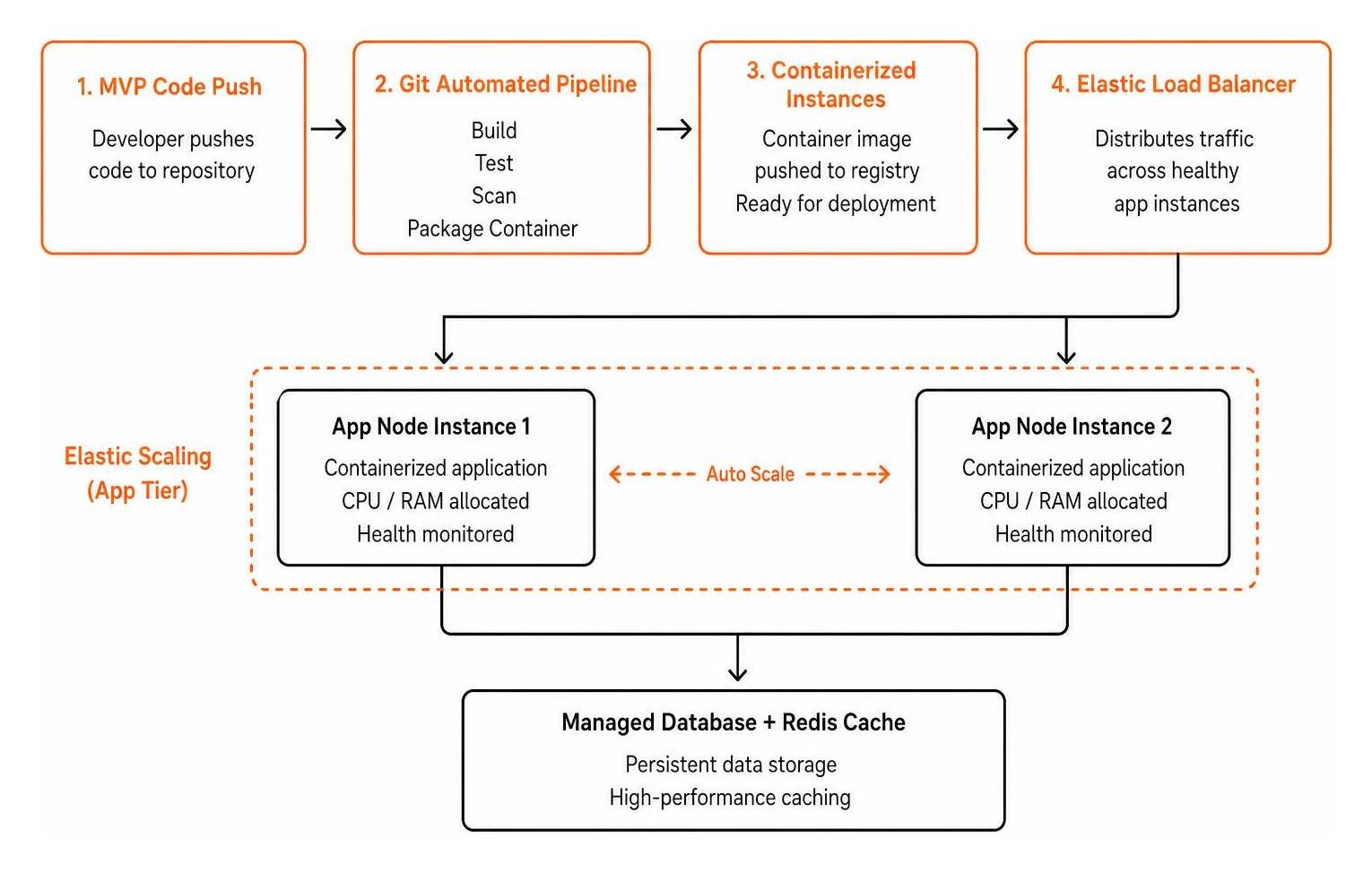
Many founders leverage credits from incubator and cloud startup programs, which offer credit grants that keep infrastructure spending near zero during critical development windows. Specialized managed cloud environments provide dedicated compute instances and transparent pricing that safeguard runway against variable hyperscaler billing spikes.
Top Hosting Architecture Patterns to Avoid Early Overspending
Architecture decisions made during the pre-seed phase dictate how quickly your engineering team can iterate. Data published by Andreessen Horowitz shows that over 60% of funded startups pivot or significantly expand their product offering within their first two years. If your infrastructure is tightly coupled to complex, proprietary cloud APIs, pivoting becomes an expensive engineering challenge that eats into your remaining runway and slows down every subsequent release cycle.

Using our evaluated fastest web hosting options for quick load times ensures that your site delivers rapid response rates without requiring custom caching layers. Serverless compute options and managed container platforms both offer founders a way to pay only for the resources they actually consume, rather than reserving idle capacity that drains cash reserves month after month while your team focuses on product iteration.
WordPress and CMS Platforms for Content-Driven MVPs
For content-driven products, directories, or standard SaaS marketing funnels, open-source WordPress paired with managed hosting delivers fast iteration times. Modern managed platforms handle Core Web Vitals optimization, automated staging environments, and edge caching out of the box, which means your marketing team can publish and test conversion-focused landing pages without waiting on engineering support.
When your marketing engine begins driving substantial volume, our roadmap on managing high-traffic WordPress sites without overpaying helps maintain sub-second response times without forcing an enterprise infrastructure migration.
Container and Developer-Centric Stacks for Web Apps
If your core product is a custom web application, containerized hosting provides the cleanest separation of concerns. Using Docker containers deployed to modern PaaS environments allows developers to connect managed PostgreSQL instances and Redis caching layers in minutes, dramatically shortening the time between a code commit and a live production deployment.
This workflow standardizes your staging and production environments, eliminating the dreaded “it works on my machine” roadblock while keeping monthly operating costs tightly controlled. Automated deployment pipelines also reduce API latency issues, since configuration drift between environments is minimized and every release follows the same reproducible build process.
Technical Must-Haves: What Founders Should Look For
A 2024 survey revealed that 82% of seed-stage SaaS companies had to rebuild their core web infrastructure within 18 months due to early hosting limitations or restrictive platform lock-in. Avoiding that disruption requires auditing hosting providers against core technical criteria before signing annual contracts.

For a broader breakdown of technical hosting features, review our complete guide to web hosting services.
Key Features in the Best Hosting for Startups Before Scaling
- Integrated Global Content Delivery Network (CDN): Serving cached assets from edge nodes reduces latency for distributed teams and global prospective clients.
- Single-Click Staging Environments: Testing feature branches or core updates on isolated staging URLs prevents breaking production funnels.
- Automated Daily Backups with Point-in-Time Recovery: Guarding against accidental data overwrites or faulty code pushes without manual snapshot management.
- Git Deployment Integration: Continuous deployment workflows that push code straight from repository merges into live containers save dozens of engineering hours.
- Zero Platform Lock-In: Solutions built on standard Linux runtimes, standard databases, and container formats allow you to migrate servers whenever pricing or performance dictates.
Essential Security and Compliance from Day One
Securing customer data is non-negotiable, even for pre-revenue startups. Enterprise buyers and investors assess security maturity during preliminary due diligence. Your hosting foundation should supply automated SSL management, isolated database environments, and deployment centers certified under standards like ISO 27001 or GDPR frameworks. Role-based access controls ensure team members only hold access privileges relevant to their active tasks.
Common Hosting Mistakes That Burn Early Startup Runway
- Premature Multi-Cloud Architecture: Setting up Kubernetes clusters across multiple public clouds before establishing product-market fit introduces massive operational drag for zero business gain, since maintaining redundant tooling and monitoring across providers demands engineering hours you cannot spare.
- Proprietary Website Builder Lock-In: Building core workflows inside closed, proprietary site builders can make extracting clean code or migrating databases nearly impossible when requirements scale, leaving founders stuck paying for features they have already outgrown.
- Ignoring Uncapped Bandwidth and Egress Fees: Hyperscale cloud providers frequently charge steep bandwidth overage fees when media assets or API payloads scale rapidly, turning what looked like an affordable monthly bill into a surprise five-figure invoice.
- Neglecting Business Email Integration: Separating application servers from domain DNS and communication channels often causes deliverability failures; review our guide on integrated domain and email hosting setups to structure your messaging infrastructure cleanly and avoid losing customer inquiries to spam folders.
Frequently Asked Questions About Startup Web Hosting
How much should an early-stage startup budget for web hosting in 2026?
A pre-seed startup should typically spend between $5 and $30 per month for marketing and MVP hosting. Bootstrapped teams can leverage founder startup credit programs for free managed starter resources, or specialized cloud hosting platforms for predictable, fixed-rate hosting. Funded startups with active workloads might budget $30 to $80 per month on managed cloud instances, only scaling beyond that threshold when paying user volume justifies the expense.
Is shared hosting sufficient for launching an MVP?
Shared hosting works well for basic single-page landing pages, waitlist capture funnels, and early validation sites that receive fewer than 10,000 monthly visits. However, if your MVP requires background worker processing, WebSocket connections, or dedicated database queries, moving directly to an entry-level managed VPS prevents performance bottlenecks.
When is the right time to migrate from simple hosting to cloud infrastructure?
You should consider migrating when your application experiences consistent database connection bottlenecks, requires microservices isolation, or needs dynamic auto-scaling to handle erratic viral traffic. If your server response times consistently exceed 800ms despite caching optimizations, an infrastructure upgrade is warranted.
Conclusion: Building a Scalable Foundation Without Wasting Capital
Achieving product-market fit requires speed, technical agility, and capital discipline. Investing thousands of dollars into complex server networks before acquiring your first hundred paying customers introduces unnecessary technical debt. By selecting scalable, modern hosting environments with clean migration paths, you ensure your application remains responsive, secure, and ready for growth.
At NY Web Consulting, based in Glendale, Queens, New York City, we help businesses build resilient web systems that drive sustainable digital growth. To establish a reliable web presence with unified communications, explore our small business website and email hosting solutions for long-term growth to power your digital operations efficiently.