
Why a New York Ecommerce Development Partner Can Give You an Edge
Choose an ecommerce development company in New York that can show you more than a good-looking storefront. Ask for examples of fast mobile sites, secure checkouts, reliable inventory or CRM integrations, and support after launch. Review its portfolio for results and ask who will do the work, how you will track progress, and what happens if something breaks.
A local partner may make meetings easier, but location alone will not grow sales. The edge comes from a team that understands your goals and can make design, speed, and behind-the-scenes systems work together.
I’m Brian Butrym of NY Web Consulting, a Queens-based web design and marketing firm focused on fast, reliable sites and search visibility. That experience guides what I look for in an ecommerce development company in New York, starting with the six strengths below.
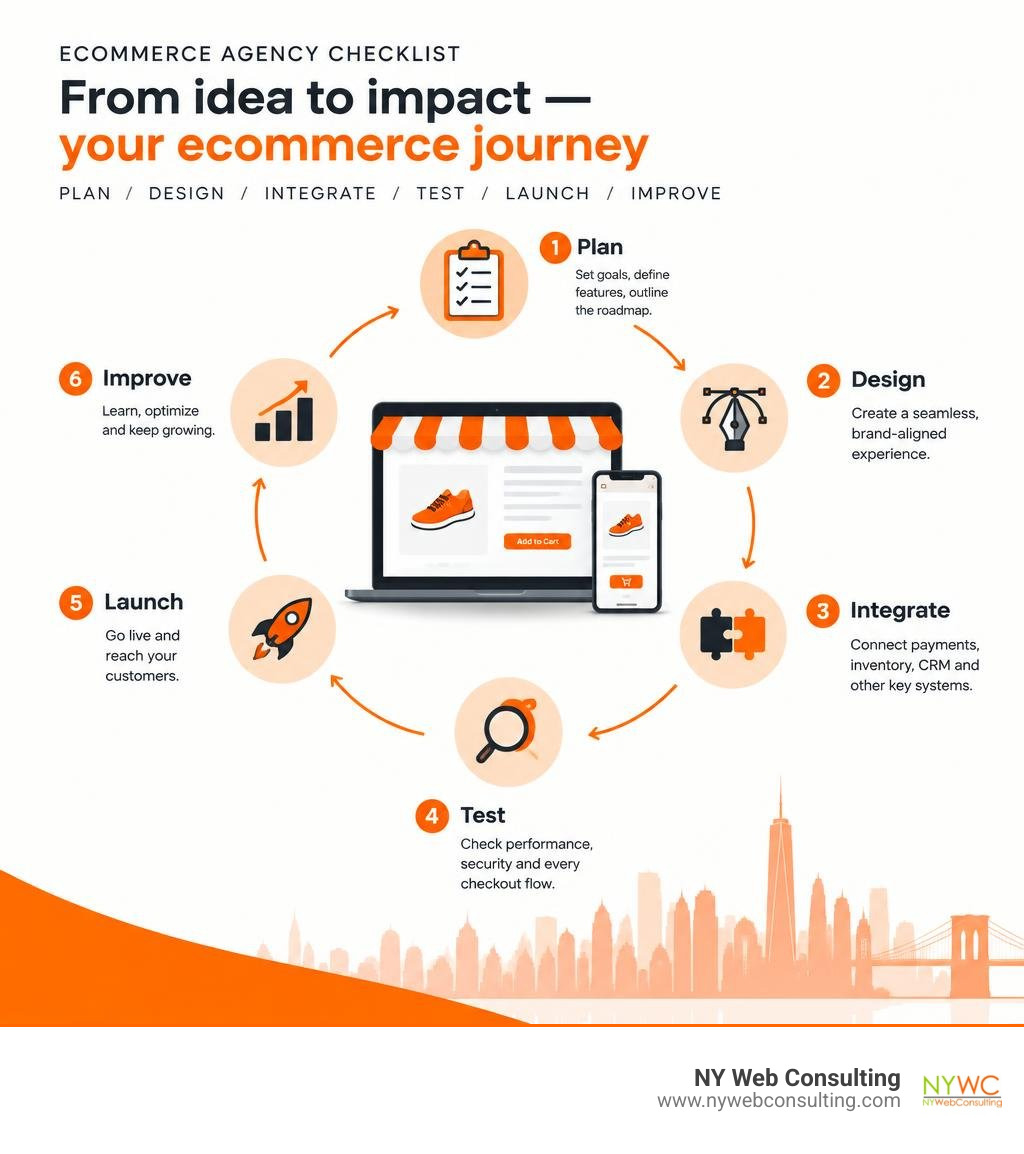
Key ecommerce development company in new york vocabulary:
6 Core Reasons to Choose an Ecommerce Development Company in New York
New York is one of the most competitive commercial hubs on the planet. Operating here means you are competing against top-tier consumer brands and sophisticated enterprise operations. To stand out, your online store cannot rely on generic, out-of-the-box templates that drag down page load speeds and break during traffic spikes.
Partnering with an experienced team ensures your technical foundation is built for scale. By leveraging specialized ecommerce application development services, businesses achieve robust data architectures, streamlined operations, and bespoke customer journeys that drive measurable revenue. Here are the six primary advantages of working with a dedicated partner.
1. Deep Integrations with ERP, CRM, and Inventory Systems
A digital storefront is only as effective as the back-office operations powering it. When orders roll in, manual data entry or clunky CSV exports create bottlenecks, shipping delays, and inventory inaccuracies that frustrate shoppers.
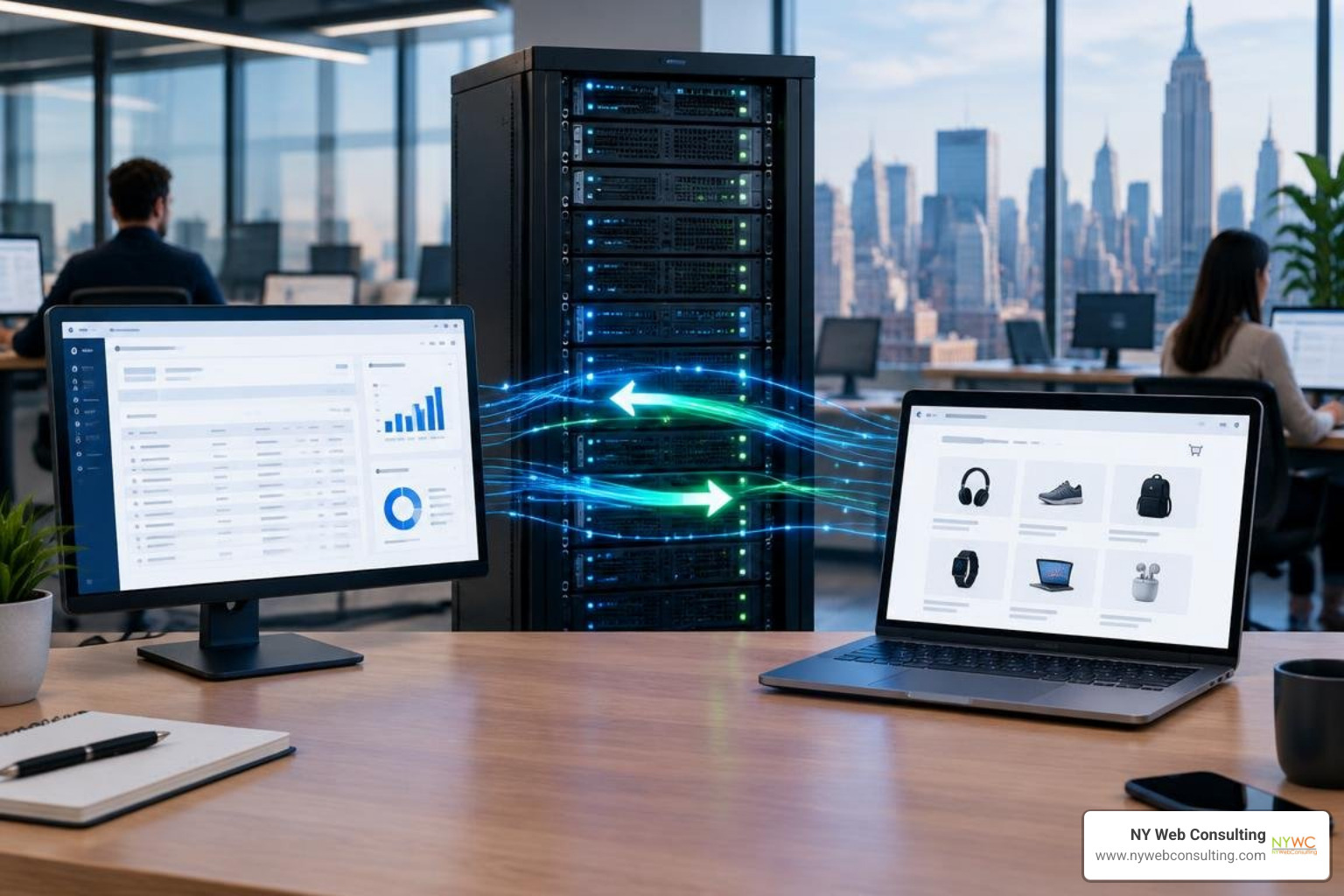
A dedicated New York engineering team builds seamless, bidirectional API data flows between your commerce platform and your core operational software:
- Enterprise Resource Planning (ERP): Systems like SAP, NetSuite, or Microsoft Dynamics stay aligned with real-time sales data, tax rules, and procurement schedules.
- Customer Relationship Management (CRM): Customer interactions, buying history, and lifetime value metrics sync automatically to platforms like Salesforce or HubSpot for tailored marketing.
- Product Information Management (PIM): Manage thousands of SKUs, technical specs, and digital assets across multiple sales channels from a single source of truth.
- Warehouse & 3PL Logistics: Real-time stock level synchronization prevents backorders and triggers instant fulfillment alerts.
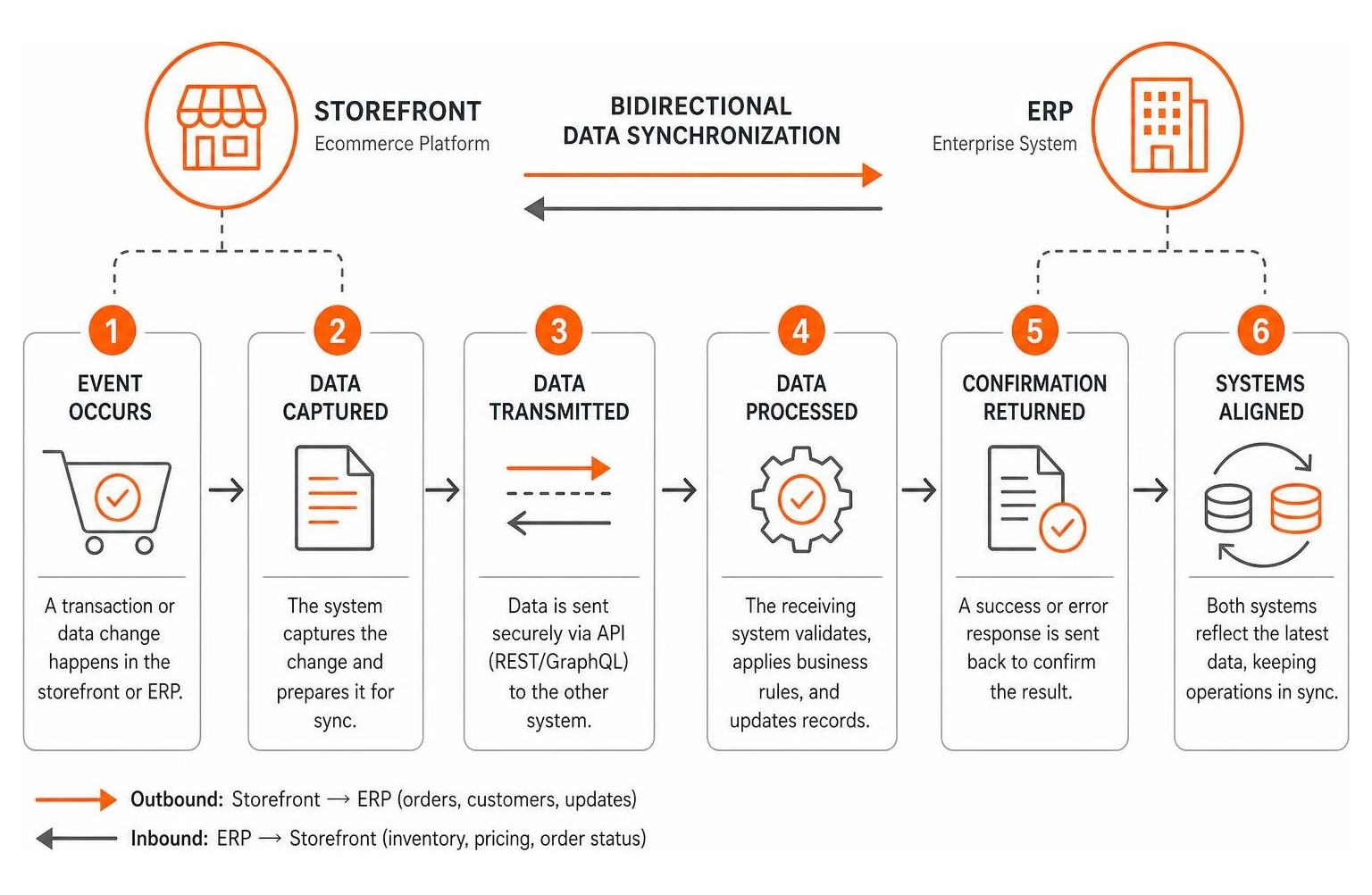
By engineering custom middleware or leveraging direct REST/GraphQL endpoints, your tech stack operates harmoniously, eliminating human error and drastically lowering support tickets.
2. Balancing High-Converting Frontend Design with Robust Backend Logic
If your online store looks stunning but takes five seconds to process a checkout payment, customers will abandon their carts. Conversely, a blazing-fast site with poor visual hierarchy will fail to build brand trust. If your site looks like it was built in 1998, modern shoppers will simply bounce to a competitor.
Achieving sustainable growth requires balancing intuitive UI/UX with solid server-side engineering. Investing in high-converting website design eliminates unnecessary checkout friction, improves Core Web Vitals, and ensures snappy mobile interactions.
When frontend polish is paired with clean database indexing, optimized caching layers (like Redis or Varnish), and lightweight script loading, your store converts browsers into buyers effortlessly across every device.
3. Proven Expertise in Zero-Downtime Platform Migrations
Migrating an established digital store from a legacy platform to a modern architecture is like performing engine maintenance while cruising at highway speeds. One misstep can erase years of organic search ranking authority, corrupt order records, or knock your store offline during peak sales windows.
Top agencies utilize blue-green deployment pipelines and parallel staging environments to execute zero-downtime migrations. They carefully map 301 redirect paths, retain historic customer databases, and protect your transaction records. Implementing smart architectural updates helps you protect legacy equity while discovering new strategies to boost online sales.
When your data structure is preserved and your new platform runs faster, you gain higher search visibility and better checkout completion rates from day one.
4. Tailored Architecture for B2B, Enterprise, and Multi-Brand Retail
Standard retail stores differ vastly from enterprise wholesale operations. B2B commerce demands advanced capabilities, such as:
- Tiered, contract-specific pricing and volume discounts
- Corporate account hierarchies with multi-user purchasing approvals
- Net terms, purchase orders, and custom credit limits
- Custom interactive product configurators that lift average order values
- Multi-storefront setups managed through a unified backend administrative dashboard
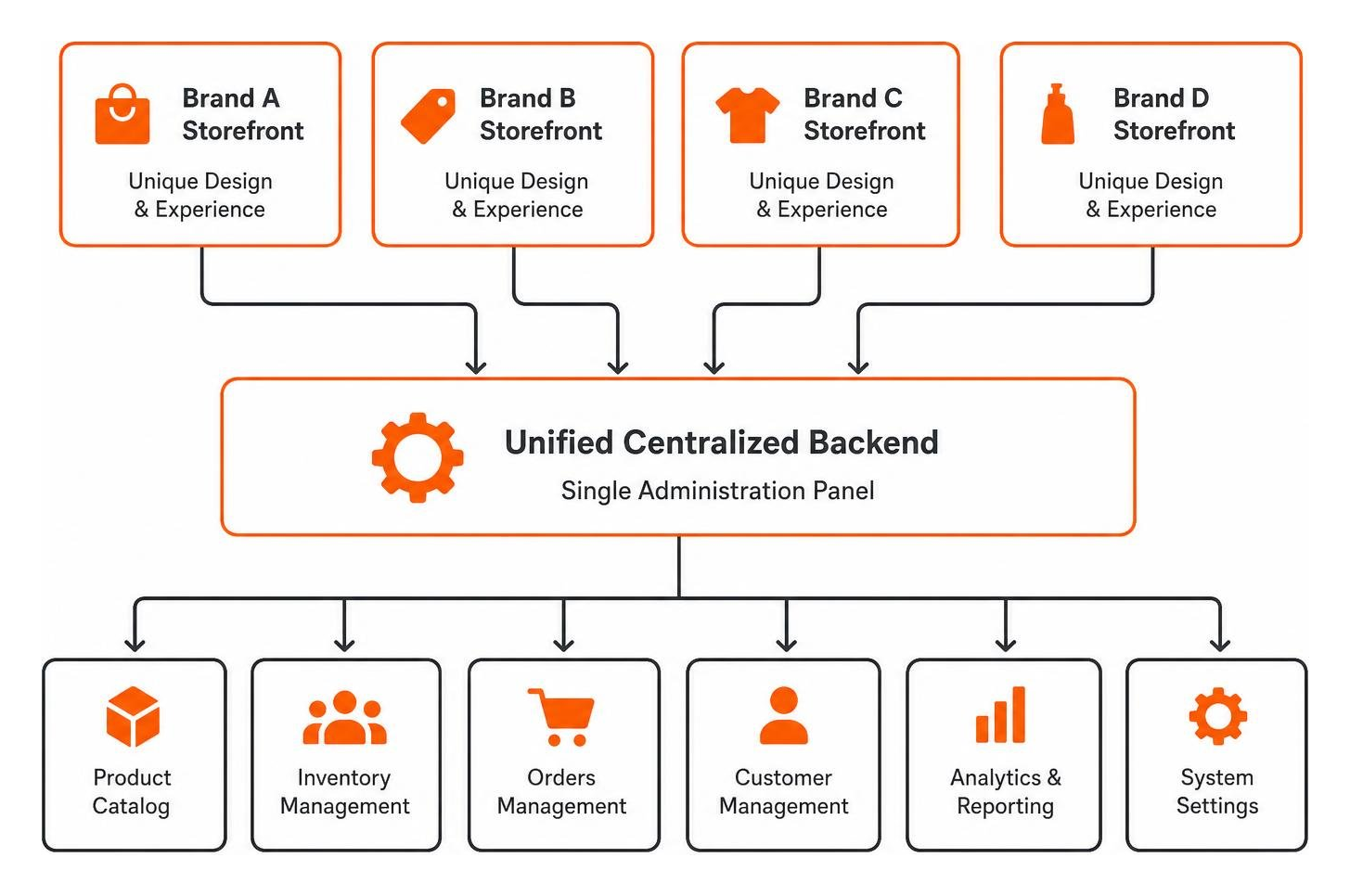
Whether you need a specialized wholesale portal or a complex multi-brand retail experience, building on scalable business website solutions guarantees your infrastructure supports enterprise-level catalog sizes and high transaction volumes without crashing.
5. Predictable Project Timelines and Cost Management
Ecommerce development projects fail when they lack clear technical scoping and structured milestone management. Experienced development teams run disciplined Agile sprints, keeping projects on schedule and within budget.
While basic storefront setups or simple design refreshes can take between 3 to 6 months, highly complex B2B platforms featuring deep ERP integrations and custom configurators typically span 6 to 12 months. Establishing a transparent project roadmap up front ensures that:
- Requirements and business processes are clearly documented before code is written.
- Architecture decisions align with total cost of ownership expectations.
- Quality assurance (QA) and load testing happen in staging rather than in production.
- Scope creep is managed methodically through continuous sprint reviews.
6. Continuous Support and Iterative Post-Launch Optimization
Launching your new ecommerce site is not the finish line—it is day one of your platform’s operational lifecycle. Software patches, third-party API changes, security updates, and shifting consumer expectations demand ongoing technical attention.
Continuous post-launch partnerships allow your business to roll out seasonal marketing promotions, patch zero-day vulnerabilities, and conduct split testing on conversion paths. Connecting post-launch engineering with data-driven SEO New York City services ensures your store maintains optimal technical hygiene, earns higher search engine real estate, and scales effortlessly over time.
Comparing Platforms Used by a New York Ecommerce Agency
Selecting the ideal platform depends on your operational model, internal technical resources, transaction volume, and long-term expansion goals.
What to Expect from an Ecommerce Development Company in New York When Selecting a Platform
A consultative development partner will never push a one-size-fits-all solution. Instead, they conduct a full audit of your current tech stack, catalog complexity, shipping workflows, and business goals.
For many businesses that prioritize content-driven commerce, ease of management, and tailored brand storytelling, leveraging Custom WordPress Development with WooCommerce or headless microservices provides exceptional flexibility without bloated licensing fees. When paired with Building Beyond the Theme: The Art of Custom WordPress, you gain absolute control over site speed and customer experience.
Magento vs Shopware vs Custom Headless Builds
The table below highlights how popular platforms compare across key technical and business considerations:
| Platform / Approach | Ideal Use Case | Build Timeline | Customization Depth | Maintenance Demand |
|---|---|---|---|---|
| Magento (Adobe Commerce) | Enterprise retail & massive B2B catalogs | 6–12 months | Deep architectural customization | High (regular patches & server tuning) |
| Shopware | Mid-to-enterprise brands seeking fast agility | 4–8 months | Modular, API-first flexibility | Moderate |
| Custom Headless / WordPress | Content-heavy commerce & custom workflows | 3–6 months | Complete frontend and UX freedom | Low to Moderate |
Whether you require an open-source monolith or an API-driven headless engine, your platform should enable fast merchandising without creating technical debt.
Key Criteria for Evaluating Local Development Partners
Finding the right development partner means looking beyond glossy sales decks and evaluating real-world technical expertise.
How to Vet an Ecommerce Development Company in New York Before Signing
When evaluating candidate agencies, use this structured checklist:
- Review Verifiable Case Studies: Look for documented performance improvements, such as lower page load times, higher checkout conversions, or reduced support ticket volumes.
- Assess Engineering Seniority: Inquire about who will actually write and review your code. Senior-led teams minimize architectural mistakes and reduce rework down the line.
- Check Community Reputation: Review independent tech roundups and check out community discussions on top New York agencies to see how candidate firms perform under pressure.
- Evaluate Full-Service Capabilities: Ensure the agency has deep capabilities across UX design, backend logic, and digital marketing by partnering with an established custom web development agency.
Essential Questions for Collaboration and Code Audits
Before signing a contract, ask these critical technical and operational questions:

- What does your deployment and quality assurance pipeline look like?
- How do you handle version control and rollback protocols if a deployment causes errors?
- What is your standard Service Level Agreement (SLA) response time for critical production bugs?
- Do you provide full source code ownership and comprehensive documentation upon delivery?
- How do you structure communication during active sprints (e.g., Slack channels, weekly standups, Jira boards)?
Frequently Asked Questions About Ecommerce Development in New York
How much does an enterprise ecommerce project cost and how long does it take?
Project budgets depend on catalog volume, backend complexity, third-party integrations, and design requirements. Standard custom ecommerce builds typically range from 3 to 6 months, while complex enterprise and B2B platforms featuring ERP synchronizations and custom configurators require 6 to 12 months of structured engineering.
How do agencies ensure zero downtime during platform migrations?
Agencies maintain zero downtime by building and testing the new store on an isolated staging server. Customer accounts, products, and order data are migrated in batches, followed by a final delta synchronization right before DNS cutover. Parallel testing and blue-green deployment ensure that shopper traffic shifts instantly to the new environment without interrupting live checkouts.
Why is real-time ERP and CRM integration essential for modern online stores?
Real-time integration ensures inventory counts, customer pricing rules, and order fulfillment updates sync immediately across all business systems. This eliminates manual data entry errors, prevents out-of-stock purchases, and gives support teams immediate access to customer order history.
Conclusion
Building a high-performing digital storefront requires a strategic blend of conversion-focused UI design, secure backend integrations, and reliable long-term support. At NY Web Consulting, based in Glendale, Queens, we help businesses across Queens and New York City transform their online storefronts into reliable, fast, and high-converting sales channels.
If you are ready to modernize your platform, protect your SEO rankings, and build an ecommerce experience that drives measurable growth, explore our professional web design and development services to get started today.