What Is Local Digital Advertising and Why It Matters
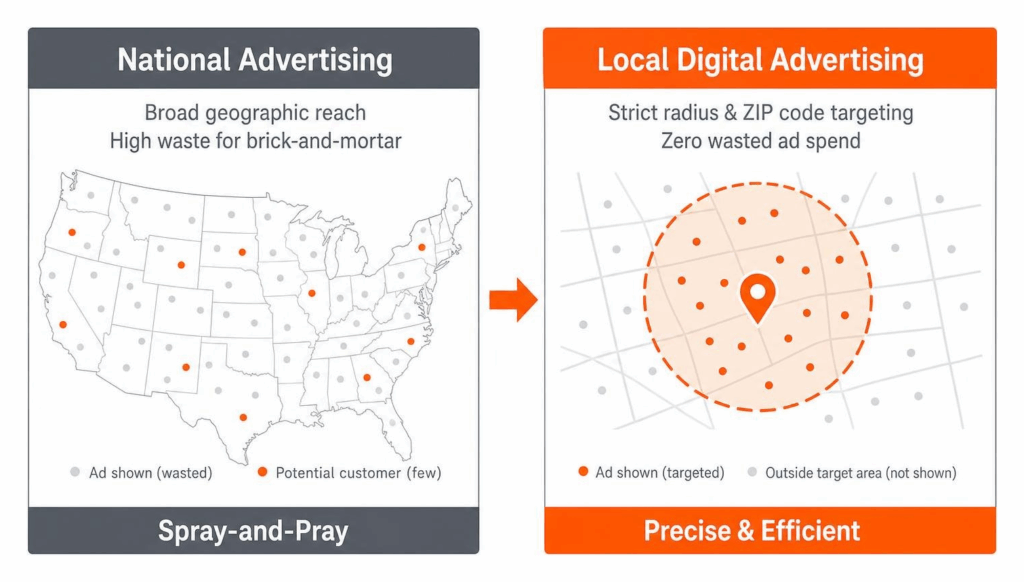
Local digital advertising is any online promotion designed specifically to reach consumers within a defined geographic radius, such as a city, neighborhood, or specific set of ZIP codes. Unlike broad national campaigns that cast a wide net across the entire country, localized marketing focuses exclusively on nearby prospects who have high intent to purchase.
When a business advertises strictly to its local community, every dollar spent targets consumers capable of visiting the physical location or booking a service within its delivery boundary.
Drivers of Nearby Customer Demand
Modern consumer purchasing habits are overwhelmingly driven by proximity. Consider these key figures:
- 85% of consumers perform online research before making a purchase.
- 46% of all Google searches are seeking local information.
- Over 76% of customers who search for a local business visit a physical location within 24 hours.
- 90% of all consumer purchases occur within 15 miles of a buyer’s home or office, and nearly 88% of consumers shop locally at least once a week.
Because mobile devices instantly provide context-aware results for “near me” searches, consumers expect immediate, highly localized answers. If your business does not display prominently during these moments, local customers will simply visit a competitor down the street.
Core Benefits of Local Digital Advertising
Focusing your resources on local digital channels offers distinct competitive advantages over broad online promotion:
- Zero Ad Waste: Paying for ad impressions in cities or states you do not serve drains capital. Local targeting ensures your ads display only to relevant prospects.
- Higher Conversion Rates: Local intent searches display strong buying motivation. Nearby users searching for emergency services or local dining are ready to act immediately.
- Neighborhood Dominance: By capturing top positions across map packs, local search ads, and neighborhood networks, small businesses can outshine larger national brands that lack localized presence.
- Long-Term Retention: Research shows that local agency relationships and regional client retention typically span three to five years because localized performance delivers direct, verifiable revenue.
Essential Channels for Local Digital Advertising
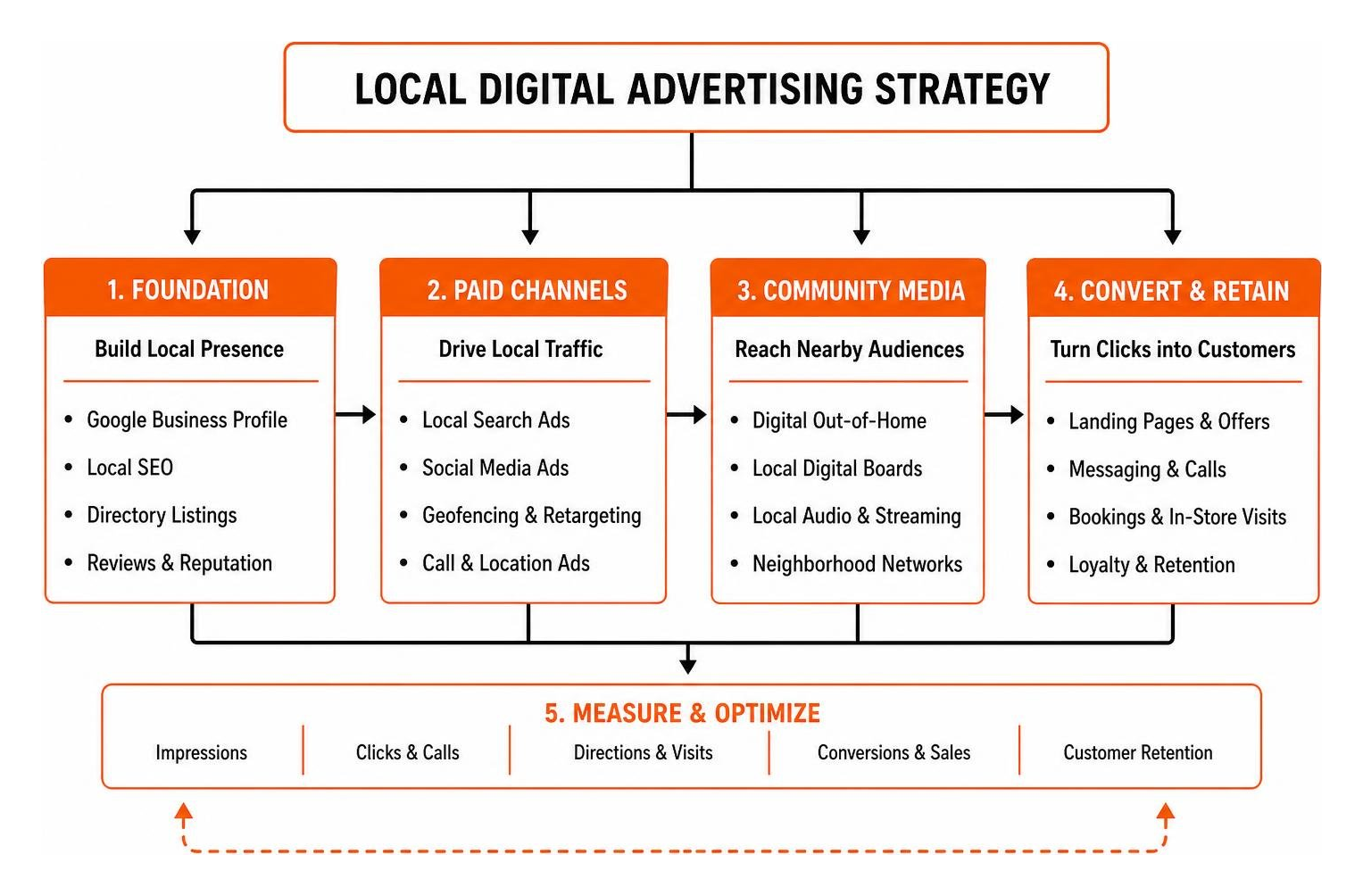
To build an effective presence, small businesses must balance search visibility, active directory management, localized social ads, and emerging local media formats.
Optimizing Search Profiles and Directories
Your Google Business Profile (GBP) forms the core foundation of local digital visibility. Claiming and completing your GBP profile gives you access to the coveted Google “Map Pack”—the top three local map results shown for nearby queries.
To maximize search visibility:
- Fully fill out every profile field. Profile details and category selections directly function as search keywords.
- Keep your Name, Address, and Phone number (NAP) identical across all directory platforms like Apple Maps, Yelp, Bing, and Nextdoor.
- Collect customer reviews systematically and respond quickly to both positive and negative feedback.
- Add high-resolution photo uploads, service menus, and regular updates to showcase business activity.
For a deeper look into optimizing your profile, explore The Power of Creating a Google Business Profile in 2023 and review our guide on Local SEO Solutions to Make Your Business Famous Nearby.
Social Media and Audio Channels in Local Digital Advertising
Social platforms offer advanced location and demographic targeting for local campaigns:
- Facebook & Instagram: With billions of active users, over 62% of businesses leverage Facebook for marketing, often achieving average conversion rates around 9.2%. Platforms like Instagram allow businesses to capture visual discovery—over 70% of shoppers use Instagram to discover new products.
- Local Micro-Influencers: The influencer marketing industry has surpassed $16.4 billion globally, with roughly 93% of marketers using it. Partnering with hyper-local micro-influencers offers authentic community credibility, higher engagement rates, and lower campaign costs than celebrity endorsements.
- Streaming Audio Ads: Only 15% of digital advertisers currently run streaming audio ads. Sponsoring local podcasts or running location-targeted audio ads on platforms like Spotify presents an effective, low-competition channel to reach attentive listeners.
How to Integrate Local SEO and PPC with Geotargeting
Combining organic local search engine optimization (SEO) with instant pay-per-click (PPC) advertising creates a reliable engine for acquiring nearby leads. When managing search engine visibility in markets, working with a dedicated New York SEO Consultant or a skilled New York Local SEO Company can help accelerate your trajectory.
Location-Specific Keyword Strategies
Instead of bidding on generic terms like “plumbing repair,” local campaigns should focus on high-intent long-tail keywords combined with geographical modifiers (e.g., “emergency plumber in Glendale Queens” or “commercial electrician NYC”).
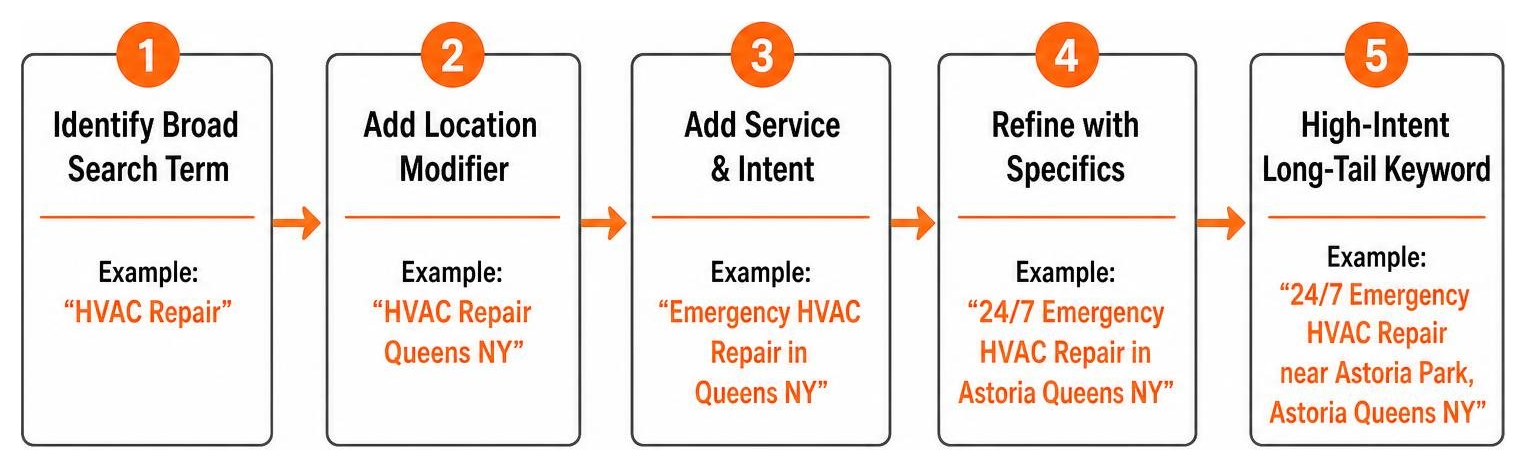
Key steps for location-based keyword targeting:
- Build distinct service area pages for every neighborhood or city you serve.
- Include local landmarks, ZIP codes, and service descriptions naturally within headings and copy.
- Ensure ad copy on PPC Advertising campaigns directly matches the specific neighborhood mentioned on the destination landing page.
Review our guide on How to Rank Faster Using Long Tail SEO Keywords to refine your keyword structure.
Geofencing and Precision Targeting
Modern pay-per-click and display platforms allow advertisers to build virtual perimeters (“geofences”) around specific physical locations.
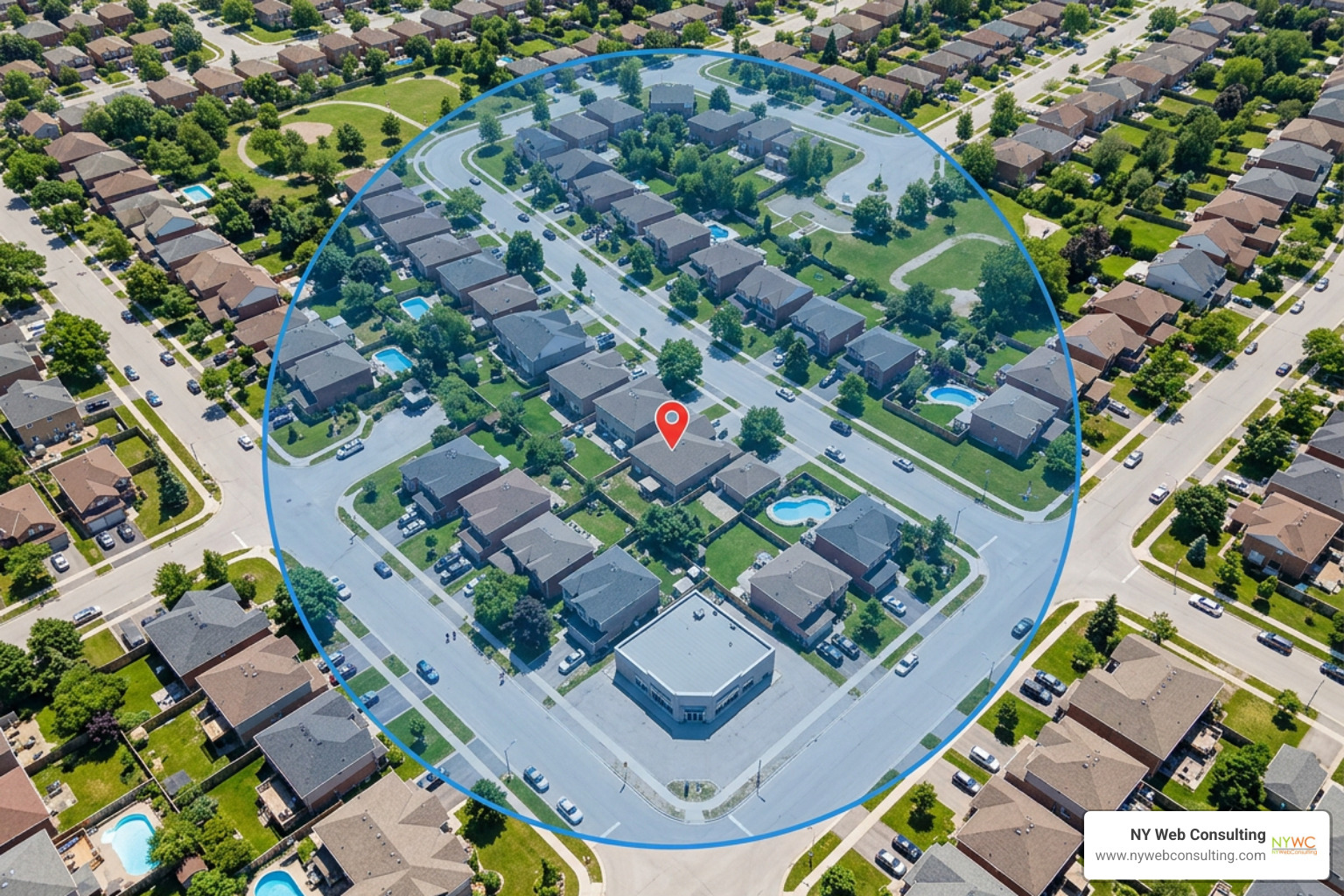
Precision targeting tools allow small businesses to:
- Target narrow radius parameters (e.g., 1 to 5 miles) around a physical store.
- Configure Google Ads to target specific ZIP codes to avoid out-of-bounds leads.
- Run programmatic display campaigns via dedicated networks like LocalScale that deliver localized banners across participating mobile apps and websites.
If you operate in competitive metro markets, review options from experienced New York City SEO Agencies or explore tailored Local SEO Queens strategies to secure local search dominance.
Exploring Hyperlocal and Next-Gen Local Ad Networks
Beyond traditional search engines and mainstream social networks, small business owners have access to flexible hyperlocal channels that offer high local visibility at lower entry costs.
| Channel / Platform Type | Typical Monthly Cost Range | Ideal Business Use Case | Key Strategy & Best Practices |
|---|---|---|---|
| Google Ads (PPC) | $50 – $500+ | Direct lead capture for immediate search intent | Target specific ZIP codes and high-intent local keywords |
| Facebook & Social Ads | $150 – $600+ | Brand awareness and promotion of consumer offers | Use visual content and narrow geotargeting settings |
| Digital Out-of-Home (DOOH) | $20/screen – $240/year | Venue waiting rooms (dental, medical, auto) | Place concise 15-second visual slides with clear QR codes |
| Digital Bulletin Boards | $1 – $12/month | Low-budget local brand exposure | Pin visual ads on platforms like LocalSquare for indexed search links |
| Hyperlocal News & Podcasts | $350 – $500+ | Neighborhood saturation across local media | Combine display banners, podcast spots, and news placements via Hyperlocal Loop |
Digital Out-of-Home and Community Screens
In-venue digital screen networks place static graphics or video slides onto waiting room screens inside local medical offices, auto repair facilities, diners, and fitness centers.
Services like Local Pixel offer display placements starting around $20 per month per screen. Because patients and patrons spend anywhere from 15 to 45 minutes in waiting areas, digital out-of-home (DOOH) screens capture captive local attention without the distraction of a “skip ad” button.
Hyperlocal Ad Networks and Digital Bulletin Boards
Digital community bulletin boards, such as LocalSquare, introduce a town-grid model where local businesses can pin visual ad squares starting as low as $1 per month.
Unlike fleeting social media posts that organically reach only 2% to 5% of followers, digital bulletin board pins create individually indexed web pages with structured data. This helps your brand show up not only in traditional search engine results, but also across modern AI search engines like ChatGPT and Perplexity.
Budgeting, Costs, and Measuring ROI
Structuring a balanced digital ad budget requires matching platform expenses with expected customer lifetime value.
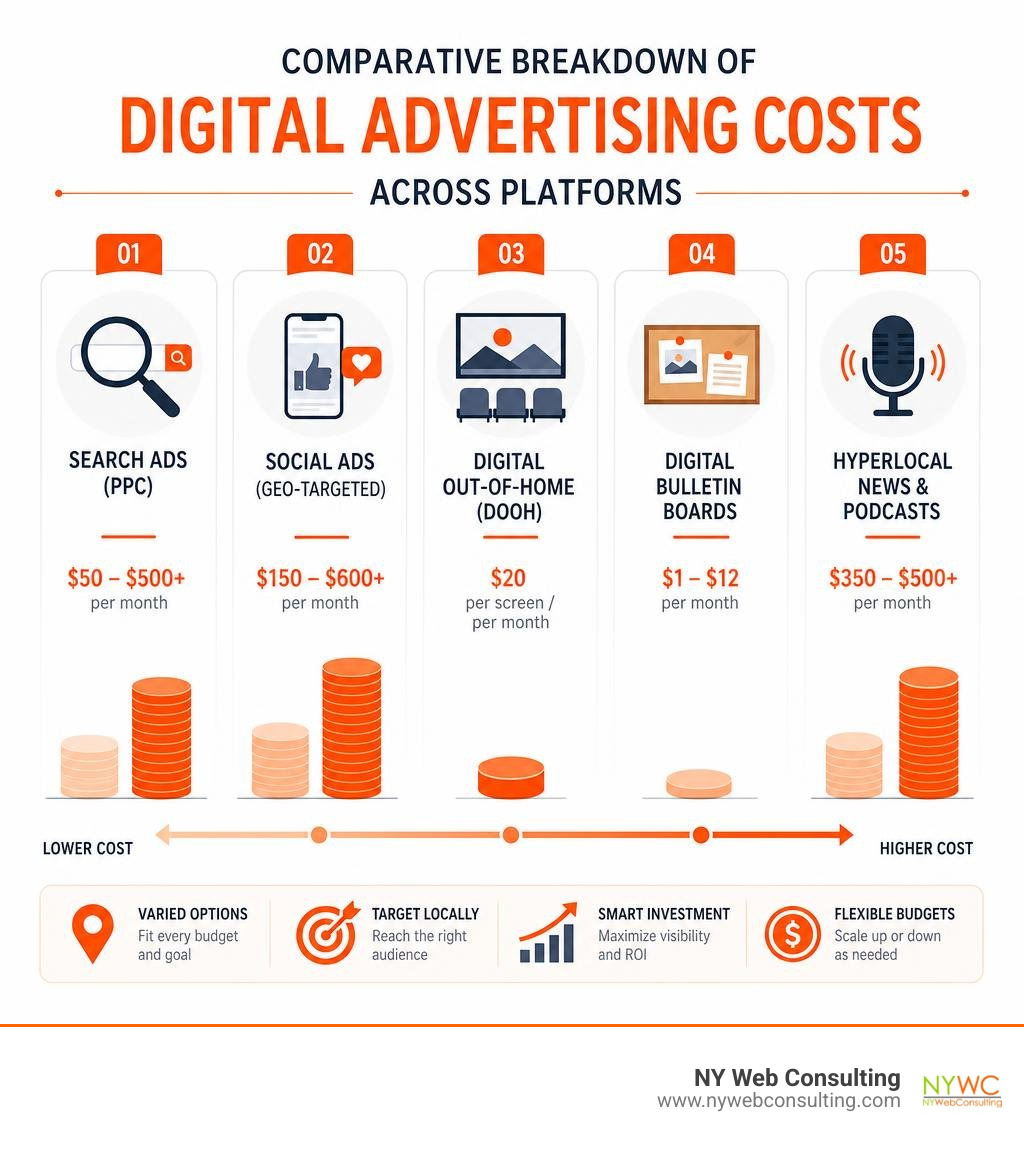
Platform Cost Comparison and Budgeting
Small business advertising budgets vary based on industry competition and campaign scope:
- Pay-Per-Click Search Ads: $50 to $500+ monthly on platforms like Google Ads.
- Geotargeted Social Media Ads: $150 to $600+ monthly on Facebook and Instagram.
- Digital Directory Ads: $100 to $1,000+ monthly across third-party local directories.
- Low-Cost Hyperlocal Channels: $1 to $50 monthly for digital bulletin board grids or local waiting room displays.
A low-budget local marketing strategy can combine free foundational tools (Google Business Profile, organic local SEO, social profiles) with affordable hyperlocal tools to maintain consistent exposure for under $50 per month.
Tracking Leads, Attribution, and Conversions
To ensure your ad spend generates actual profit, establish robust tracking across every touchpoint:
- Call Tracking Numbers: Deploy dynamic call-tracking numbers on localized landing pages to attribute incoming phone calls back to specific PPC campaigns.
- UTM Parameters: Attach tracking tags to destination URLs across social media, banner networks, and local directories to evaluate traffic quality inside Google Analytics.
- QR Codes: Place scannable QR codes on physical displays or DOOH screens to direct offline foot traffic to specific mobile landing pages.
- Landing Page Optimization: Direct paid clicks to dedicated, high-converting service pages instead of generic homepages.
To transform incoming ad traffic into paying clients, review our guides on How to Turn Your Website Into a Lead Generation Machine and High Converting Websites Why Your Design Is Costing You Money.
Frequently Asked Questions About Local Digital Advertising
How does local digital advertising differ from national advertising?
Local digital advertising restricts campaign visibility strictly to pre-selected geographic zones (such as a 10-mile radius or designated ZIP codes). National advertising broadcasts messages broadly across entire regions or countries. Local targeting eliminates budget waste by reaching only nearby consumers who can visit or hire your business.
What is a realistic monthly budget for a small business?
A small local business can launch a effective marketing stack for anywhere from $100 to $500 per month. By pairing free platforms like Google Business Profile with affordable hyperlocal networks and focused search ads, small brands can capture steady local market share without huge enterprise budgets.
How fast can a local business expect results?
Paid search ads (PPC), geotargeted social campaigns, and digital venue screens generate instant impressions and direct leads within 24 to 48 hours of launch. Organic search engine optimization (SEO) and directory listing authority typically build momentum over 3 to 6 months to deliver sustainable long-term search rankings.
Building Your Local Digital Marketing Plan

Reaching nearby buyers requires a targeted, structured strategy. By aligning optimized search listings, precise PPC keywords, active social channels, and affordable hyperlocal screen networks, small business owners can dominate their target market efficiently.
At NY Web Consulting, we specialize in building fast, secure, lead-generating websites paired with custom search and marketing strategies. Explore our full menu of Marketing for Small Businesses or SEO Services NYC to convert nearby online searches into long-term clients.
Ready to attract more local customers? Contact our team today to build a campaign tailored to your business goals.