
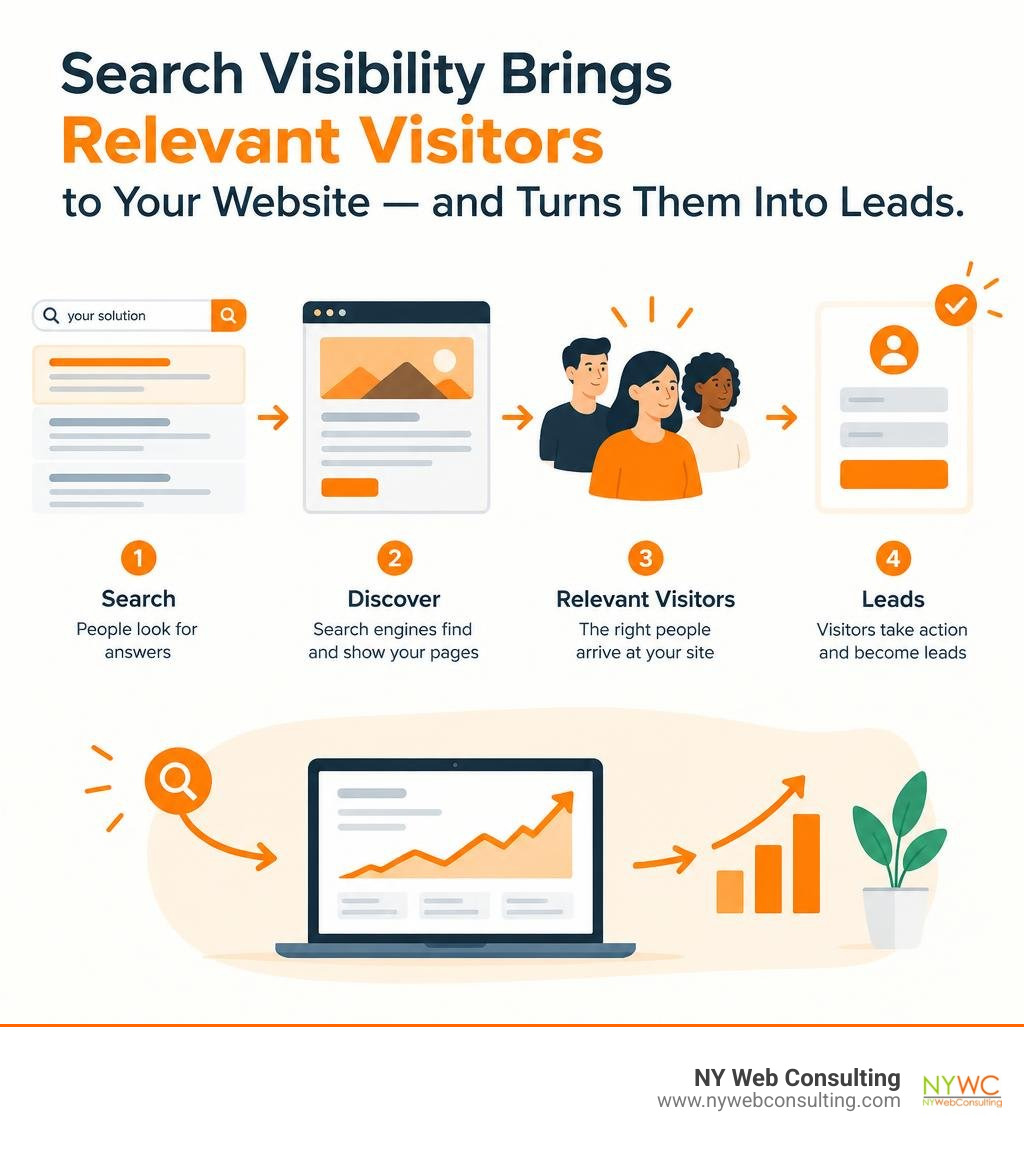
How SEO Helps Your Website Bring In Customers
SEO for websites means making your pages easier for search engines to find and more useful for people to visit. Start by checking that Google can access your pages. Then make your site fast, mobile-friendly, and secure. Create pages that answer your customers’ questions, give each page a clear title, and link related pages together. These steps can help you earn more visits from unpaid search results and turn the right visitors into leads.
I’m Brian Butrym of NY Web Consulting, where my work in web design and development has focused on fast, reliable sites and SEO for websites. Let’s start with how search engines find your pages.
How Search Engines Work: Crawling, Indexing, and Ranking
Understanding How Search Engines Process and Rank SEO for Websites
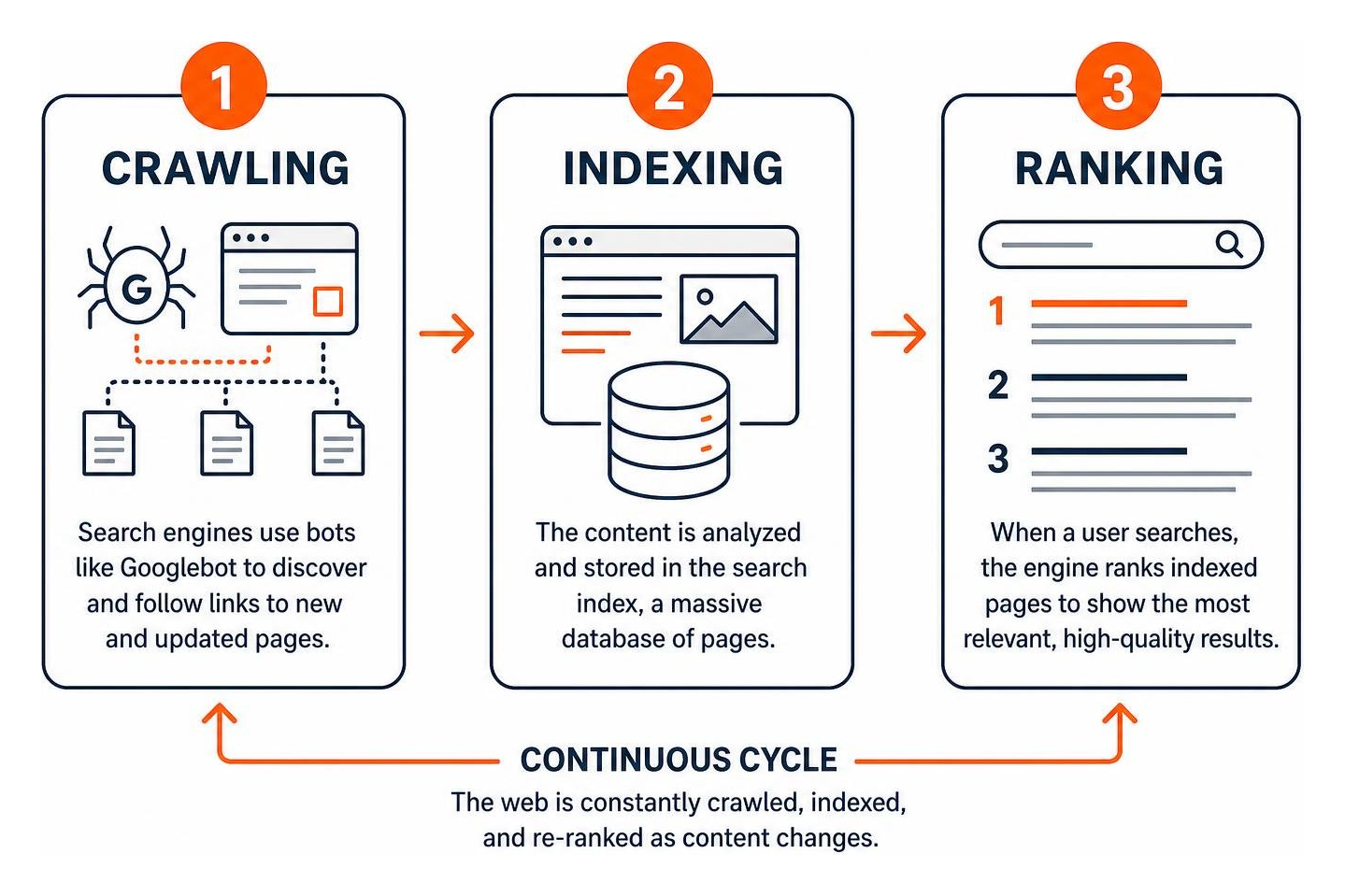
Search engines operate like vast digital libraries that update every second. To present helpful results when someone types a query, Google and other search engines perform three fundamental actions:
- Crawling: Automated bots, primarily Googlebot, scour the web to discover new and updated content. They navigate by following links from page to page.
- Indexing: Once a bot finds a page, it analyzes the content, images, and structure, storing that data in a massive database called the search index.
- Ranking: When a user enters a search phrase, the search engine sorts through billions of indexed pages to display the most relevant, high-quality results.
In the early days of the web, search algorithms relied on basic keyword counts and original PageRank signals. Today, modern algorithms assess hundreds of factors, from user experience to semantic relevance.
As explored in The Beginner’s Guide to Technical SEO, search bots must also render modern code like JavaScript to read a page accurately. If critical content is locked behind heavy scripts that bots cannot execute, your pages might never make it into the index. A typical search engine results page (SERP) features 7 to 10 organic links, alongside AI-generated summaries, making indexation and technical clarity essential.
Essential Site Structure and URL Architecture
Search engines and human visitors both prefer a clean, intuitive layout. A strong site structure organizes your content into logical categories, creating a pyramid shape where the homepage sits at the top, broad categories sit in the middle, and specific pages or articles sit at the bottom.
To build an architecture that supports organic visibility:
- Group related pages into directories: Keep similar topics within descriptive folders (such as
/services/web-design/or/blog/seo-tips/). - Use breadcrumb navigation: Breadcrumbs show visitors their path from the homepage to their current location, making browsing easier while giving search bots structured context.
- Craft readable, descriptive URLs: Use short, lowercase slugs separated by hyphens (e.g.,
example.com/fast-loading-tips) rather than strings of random numbers. - Implement canonical tags: When identical or similar content exists on multiple URLs, canonical tags inform search engines which version is the primary master page, eliminating duplicate content confusion.
If you are structuring a new digital presence, discovering how to optimize your website for search engines early will save you from messy site migrations later.
Core Pillars of SEO for Websites: Technical, On-Page, and Off-Page
Technical SEO Fundamentals and Core Web Vitals
Technical SEO creates the foundation that allows search engines to access and understand your website effortlessly. Without a solid technical base, even high-quality writing will struggle to rank.

A few non-negotiable technical components include:
- Mobile-First Indexing: Ever since mobile traffic crossed the 50% threshold years ago, Google primarily evaluates the mobile version of your pages for indexing and ranking. Responsive web design is essential.
- HTTPS Protocol: Secure browsing is a baseline standard. Secure Sockets Layer (SSL) certificates protect user data and build visitor trust.
- Robots.txt & XML Sitemaps: A properly configured
robots.txtfile prevents bots from wasting crawl budget on private admin areas, while an XML sitemap submitted through Google Search Console acts as a roadmap for discovering new pages. - Schema Markup: Structured data added to your code helps search engines understand specific details, such as local business information, FAQs, reviews, and event dates, unlocking rich snippets in search results.
- Core Web Vitals: Google measures real-world user experience through specific performance metrics:
- Largest Contentful Paint (LCP): Measures loading speed; the main content should load within 2.5 seconds.
- Interaction to Next Paint (INP): Measures page responsiveness; interactions should respond in under 200 milliseconds.
- Cumulative Layout Shift (CLS): Measures visual stability; elements should not unexpectedly jump around as the page renders, maintaining a score below 0.1.
If your site feels sluggish, leveraging fast website optimization services can remove performance bottlenecks and improve user retention.
Modern On-Page Optimization and Content SEO for Websites
On-page optimization focuses on refining individual web pages to satisfy search intent while communicating topical relevance clearly to search engines.
Start with thorough keyword research to understand the language your potential clients use. While broad terms have high search volume, you can achieve faster visibility by ranking faster with long tail SEO keywords, which are more specific, lower-competition phrases (e.g., “fast responsive website design for small businesses” instead of just “web design”).
When optimizing on-page elements, follow these best practices:
- Title Tags: Keep titles under 60 characters so they display cleanly on SERPs. Place your target keyword near the beginning, followed by an engaging hook or brand name.
- Meta Descriptions: Write compelling summaries around 105 to 155 characters. While meta descriptions do not directly influence rankings, they serve as your ad copy in search results, driving higher click-through rates.
- Heading Hierarchy: Use a single H1 tag for the primary page title, followed by organized H2 and H3 subheadings. This creates an easy-to-scan layout for readers and clarifies your topical flow for search algorithms.
Media Optimization for Rich Search Performance
Images and videos enrich your content, but unoptimized media can slow down your site and harm your search visibility.
To keep your pages fast and visually optimized:
- Compress Image Files: Large raw images are the most common cause of slow load times. Mastering practical methods for reducing image file sizes to increase speed ensures rapid page rendering.
- Adopt Next-Gen Formats: Serve graphics in modern image formats like WebP or AVIF, which provide high visual fidelity at significantly smaller file sizes.
- Write Descriptive Alt Text: Image alt attributes describe the visual element for screen readers used by visually impaired visitors while helping search engines index your media accurately in visual search results.
- Provide Video Schema: If you host or embed video tutorials, use video structured data alongside clear descriptive text to help search engines present key moments directly in SERPs.
Off-Page Authority, Link Building, and Digital PR
Off-page SEO encompasses all the actions taken outside your website to build trust, authority, and brand awareness. Search engines treat external links from reputable sources as votes of confidence in your content’s accuracy and value.
Not all link-building practices are created equal. The search industry categorizes tactics into three distinct approaches:
| SEO Strategy | Description | Common Tactics | Risk Level |
|---|---|---|---|
| White Hat | Ethical, guideline-compliant methods focused on genuine user value and long-term authority. | Original research, digital PR, guest contributions, unlinked brand reclamation, local citations. | Safe & Sustainable |
| Grey Hat | Tactics that push the boundaries of search engine guidelines without direct deception. | Precise anchor text trading, domain acquisition for redirects, aggressive directory submissions. | Moderate Risk |
| Black Hat | Deceptive practices designed to game search algorithms, violating search engine rules. | Hidden text, private blog networks (PBNs), automated link spam, paid link schemes. | High Risk (Penalties & De-indexing) |
Black hat shortcuts can result in algorithmic penalties or complete removal from search results. Focus on earning sustainable links by identifying the best backlink websites for organic growth through authentic community outreach, educational resources, and local business partnerships.
Content Strategy, E-E-A-T, and Modern Search Adaptations
Crafting Link-Worthy, Helpful Content
Creating helpful, user-focused content is the most reliable way to achieve sustainable organic growth. Modern search systems prioritize information that directly answers questions and satisfies user intent.
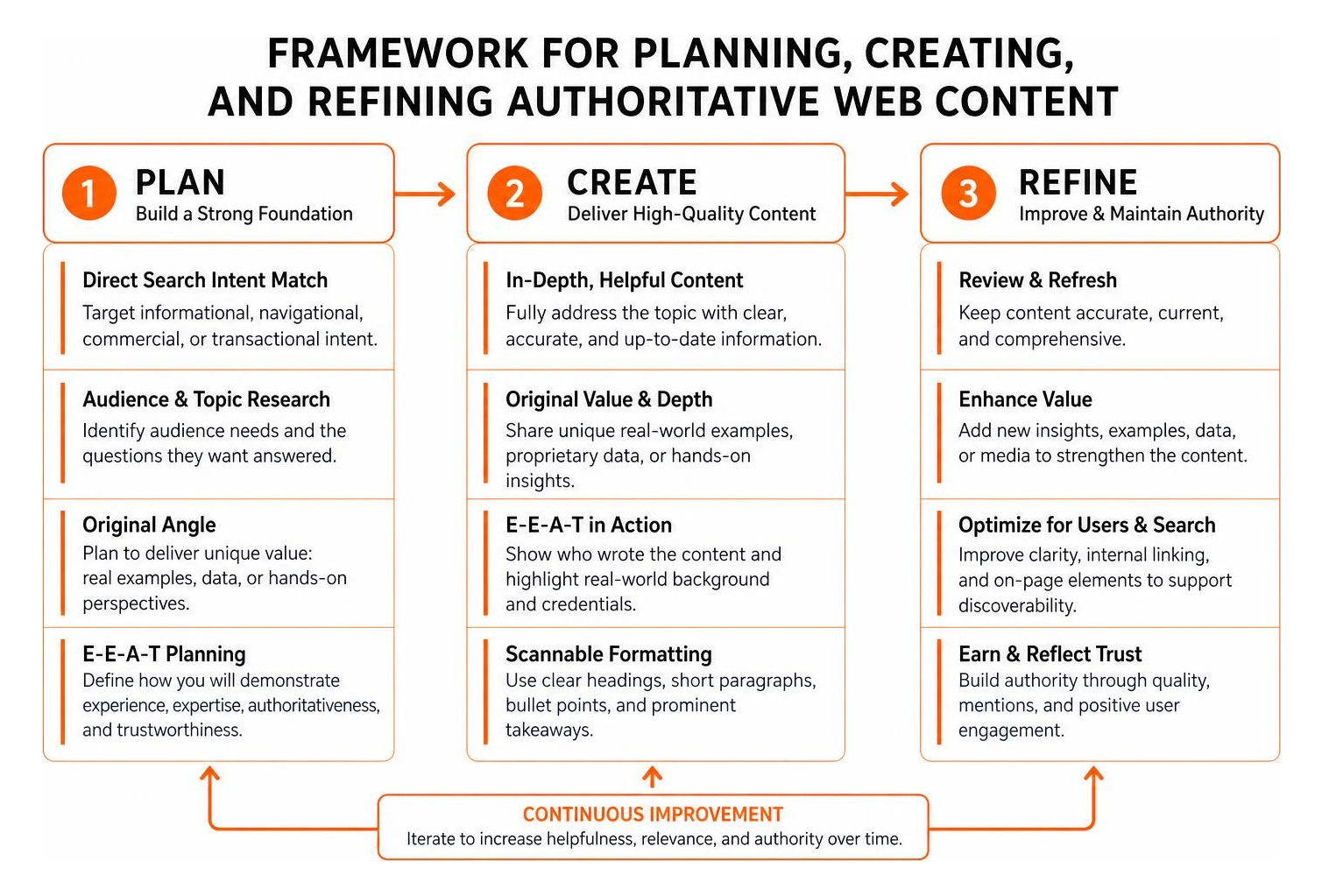
When developing content, ensure it meets these key quality criteria:
- Direct Search Intent Match: Understand whether your audience is looking to learn something (informational), find a specific brand (navigational), compare options (commercial), or make a purchase (transactional).
- Original Value & Depth: Avoid rewriting existing articles. Share unique real-world examples, proprietary data, or hands-on perspectives that provide fresh insight.
- E-E-A-T Principles: Although E-E-A-T (Experience, Expertise, Authoritativeness, and Trustworthiness) is not a direct mathematical ranking score, Google uses quality rater guidelines centered on these traits to evaluate content helpfulness. Show who wrote the content and highlight their real-world background.
- Scannable Formatting: Use concise paragraphs, descriptive bullet points, and prominent takeaways so busy readers can find solutions quickly.
As detailed in Google’s official documentation, authentic content written for people performs far better over time than mechanical keyword-stuffed text. Incorporating advanced SEO strategies like topic clusters and regular content updates keeps your authority compounding year after year.
Strategic Internal and External Linking Practices
Links help establish the context and connectivity of the web:
- Contextual Internal Linking: Connect related articles within your own domain using clear, descriptive anchor text. For example, instead of writing “click here to read more,” link a descriptive phrase like “review our website audit guide.” This distributes ranking signals naturally and eliminates orphaned pages that crawlers cannot reach.
- Authoritative External Links: Referencing reputable sources, research studies, and industry organizations adds credibility to your writing and helps search engines verify your factual accuracy.
- Appropriate Link Attributes: Use
rel="nofollow"orrel="sponsored"tags on paid partnerships, affiliate mentions, or user-generated comments to comply with search quality standards.
Adapting to AI Search and Algorithmic Evolution
The search landscape is continually evolving. Search engines now process complex queries using AI Overviews and conversational summaries that pull direct answers from authoritative sources.
To adapt your content for Generative Engine Optimization (GEO):
- Provide direct, concise definitions at the start of your articles.
- Structure information using clear subheadings, comparison tables, and lists that AI models can easily parse.
- Focus on niche, specific queries where unique real-world experience stands out against generic automated text.
- Maintain an ongoing schedule to audit, refresh, and expand your existing library so your insights remain accurate.
Measuring Performance and Debunking Outdated SEO Myths
Key Metrics and Performance Tracking Tools
You cannot improve what you do not measure. Evaluating your organic performance requires free, industry-standard analytics tools:
- Google Search Console: The primary tool for monitoring your search presence. It reports crawl errors, indexed pages, keyword rankings, average search position, and total search impressions.
- Google Analytics: Tracks visitor behavior after they arrive on your site, including organic sessions, engagement duration, bounce rates, and lead conversion paths.
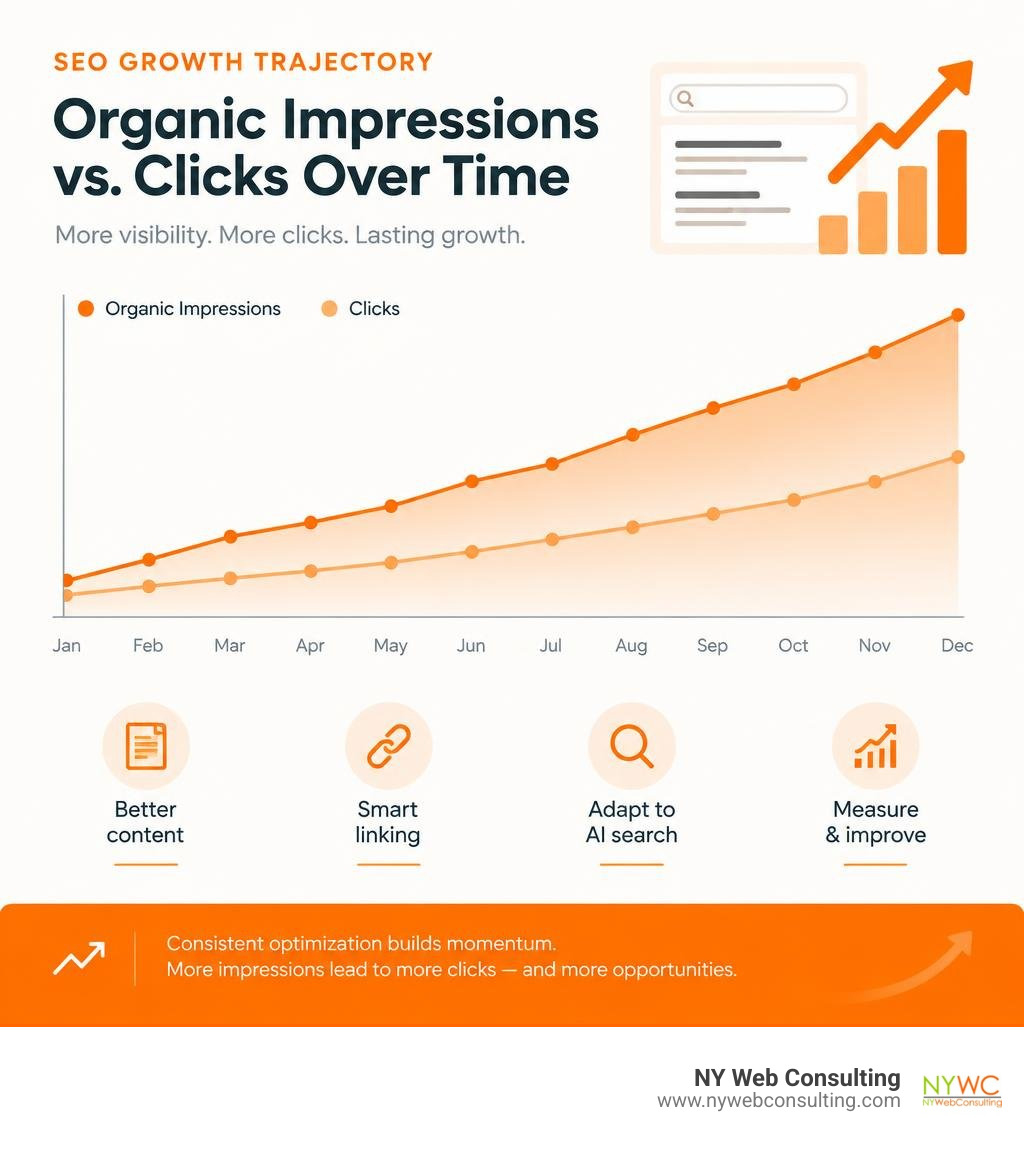
When reviewing your data, look for steady upward trends in search impressions and clicks over time. By implementing proven ways to improve website SEO, businesses typically begin seeing an increase in search impressions within 4 to 6 months of steady optimization.
Outdated SEO Tactics and Myths to Avoid
SEO has matured significantly, but several outdated myths still circulate online. Avoid these obsolete practices:
- Keyword Stuffing: Repeating a phrase unnaturally throughout a page harms readability and triggers spam filters. Write naturally for human readers.
- Meta Keywords Tag: Major search engines stopped using the meta keywords tag for ranking years ago. Adding them adds unnecessary code to your pages.
- Arbitrary Word Count Targets: There is no magical word count required to rank. A concise 600-word guide that directly answers a specific question will outrank a bloated 3,000-word article filled with fluff.
- Purchasing Cheap Backlink Packages: Buying thousands of automated links from low-quality directories guarantees search penalties. Focus on building genuine industry relationships instead.
- Hidden Text and CSS Tricks: Hiding white text on a white background or tucking keywords off-screen is easily detected by modern rendering engines and violates search guidelines.
Frequently Asked Questions About SEO for Websites
How long does it take to see organic results from SEO?
SEO is a long-term strategy rather than an overnight fix. While technical fixes and indexing adjustments can show minor movements within a few weeks, meaningful ranking improvements and organic traffic growth typically take 3 to 6 months of consistent effort. Highly competitive niches may require 6 to 12 months of sustained content publishing and link building to establish strong topical authority.
What is organic search traffic?
Organic search traffic refers to visitors who find your website by clicking on unpaid search engine listings. Unlike paid search advertising (SEM/PPC), where traffic stops the moment your daily ad budget runs out, organic visibility delivers sustainable, compounding traffic over time without paying for individual clicks.
Is content length or word count a direct ranking factor?
No. Search engines evaluate whether a page thoroughly and accurately satisfies the user’s search intent, not its raw word count. A direct, well-structured answer that solves a user’s problem in fewer words provides a better experience than padded content designed merely to hit a specific length.
Conclusion

Building a successful digital presence is an ongoing process that blends technical health, helpful content, and strategic authority building. When you prioritize user experience, mobile responsiveness, fast load times, and authentic answers to your customers’ questions, search engines naturally reward your site with higher visibility.
At NY Web Consulting, based in Glendale, Queens, NY, we help businesses across Queens and New York City transform their online presence into dependable lead generation engines through cutting-edge web design and performance-focused optimization.
If you want to strengthen your organic visibility and turn search traffic into loyal clients, explore our comprehensive website SEO services to get started today.