
Why Online Ordering Systems Are Essential for Modern Food Businesses
Online ordering systems are digital platforms enabling food businesses to accept customer orders directly through their websites, mobile apps, or social media. Here’s what they offer:
Core Functions:
- Accept orders for pickup, delivery, and dine-in
- Process payments securely (Apple Pay, Google Pay, credit cards)
- Sync orders with your POS and kitchen display systems
- Manage menus and pricing in real-time
Key Benefits:
- Additional revenue stream – Open a 24/7 sales channel
- Keep your margins – Avoid third-party commission fees (often 15-30%)
- Own customer data – Build direct relationships for repeat business
- Streamline operations – Orders flow directly to your kitchen
Who Uses Them:
- Table service restaurants and fine dining
- Quick service restaurants (QSR) and coffee shops
- Food trucks and ghost kitchens
- Catering and bakery businesses
- B2B wholesale food distributors
The right system is your digital storefront, working around the clock to drive sales while you focus on serving great food. With 78% of Toast customers reporting time savings and some seeing conversion rates 186% higher than industry averages, choosing the right platform directly impacts your bottom line.
The challenge? There’s no one-size-fits-all solution. A food truck needs mobile optimization and simple fulfillment. A multi-location restaurant needs centralized menu management. A catering business needs group ordering and production tools.
I’m Brian Butrym of NY Web Consulting. I’ve helped many food service businesses implement fast, secure, and SEO-optimized online ordering systems that convert visitors into customers. This guide will help you find the platform that fits your specific needs, budget, and growth plans.
Key Features to Demand from Your System
For a food business in New York City, Glendale, or Queens, certain online ordering system features are essential, not just nice-to-haves. These capabilities ensure smooth operations, improve customer experience, and drive growth. Think of your online platform as your 24/7 salesperson, brand ambassador, and growth engine.

Core Operational Features for online ordering systems
An effective online ordering system must streamline daily operations. Without robust back-end features, even a beautiful customer interface will falter.
- Centralized Menu Management: Update your menu across all digital channels from a single dashboard. This feature allows for easy creation, editing, and deployment of menus, ensuring consistency. Whether you’re running a cafe in Queens or a fine dining restaurant in Manhattan, you need to manage seasonal specials or daily changes effortlessly.
- Real-Time Updates: Your online ordering system should reflect changes instantly. When an item sells out, it’s immediately removed from the online menu, preventing customer disappointment and operational headaches. This also applies to pricing, special offers, and availability.
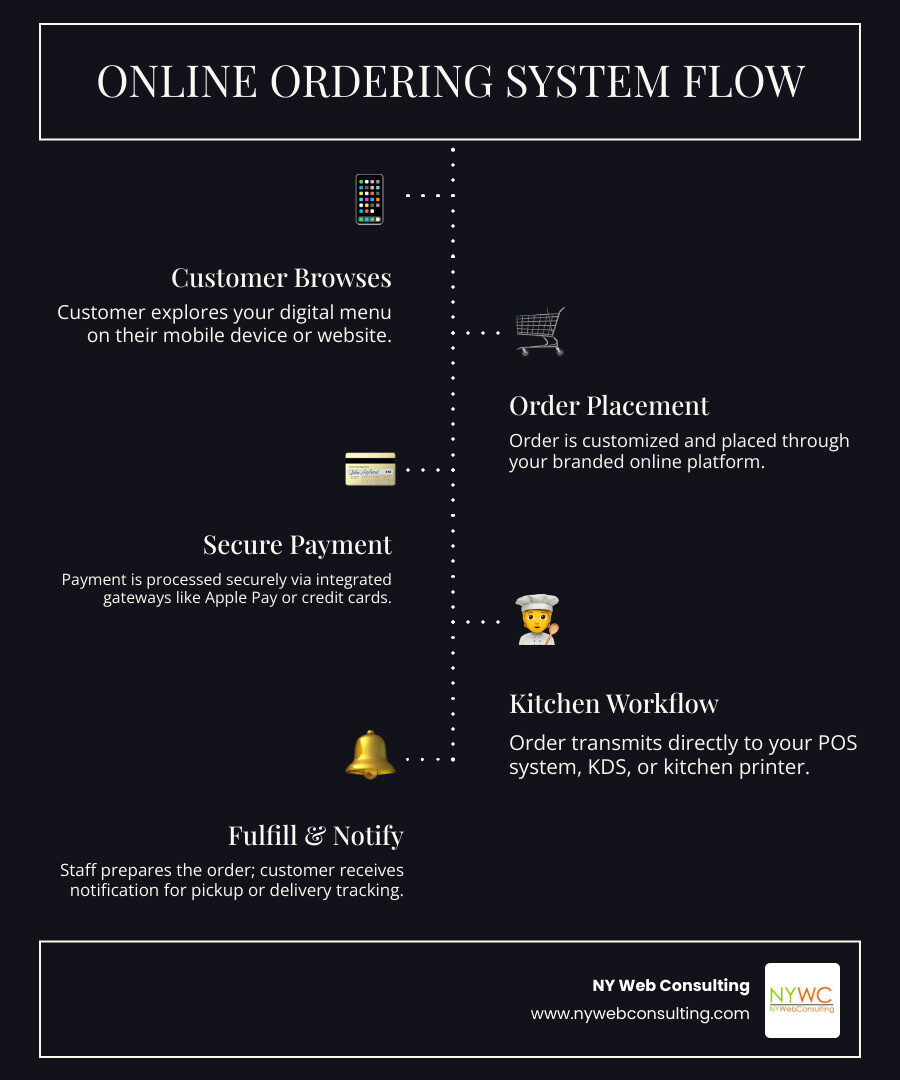
- Kitchen Display System (KDS) Sync: Seamless kitchen integration is paramount. Orders should flow directly from the online platform to your KDS or printer. This eliminates manual entry errors, speeds up order processing, and helps staff stay organized during peak hours. Our research shows that online orders will show on your Square POS and your kitchen printer or Square KDS, ensuring a smooth workflow. You can learn more about how online ordering integrates with your existing POS systems here: Online Ordering Integrating With Restaurant Point of Sale – abcPOS .
- Order Throttling and Capacity Management: For busy establishments, managing order volume is crucial. Order throttling lets you temporarily slow or pause incoming orders during overwhelming periods. Customizable capacity rules help you set limits based on staff or kitchen capacity, ensuring you never overpromise and underdeliver. This means a restaurant in Glendale can confidently manage its lunch rush without sacrificing quality.
Customer-Facing Functionality
The customer’s journey through your online ordering system should be as smooth as dining in your establishment. A clunky interface can quickly turn potential customers away.
- Intuitive Ordering Interface: The system must be user-friendly, allowing customers to easily browse, select, and customize orders. This includes clear photos, detailed descriptions, and simple navigation. An intuitive interface leads to higher conversion rates, with some platforms boasting 186% higher conversion compared to food and beverage averages.
- Mobile Optimization: Most online orders are placed via mobile devices, so your platform must be perfectly optimized for smartphones and tablets. It should load quickly, be easy to read, and simplify checkout on smaller screens. A responsive design is a must.
- Multiple Payment Gateways: Offering diverse payment options is key to convenience. Look for systems that support popular methods like Apple Pay, Google Pay, Square Pay, and all major credit cards. Secure, PCI-compliant payment processing is non-negotiable.
- Various Handoff Modes: Flexibility in how customers receive orders improves satisfaction. Your system should support pickup, delivery (including curbside and self-delivery), and dine-in ordering (via QR codes). This ensures you can meet various customer needs.
- Passwordless Checkout: Streamlining checkout reduces friction and abandoned carts. Features like passwordless sign-in (e.g., Olo Accounts) make it faster for repeat customers to complete their orders. To dive deeper into creating exceptional digital experiences, explore our insights on More info about User Experience Design.
Marketing and Growth Tools
An online ordering system is also a powerful marketing tool. The right platform helps you attract new customers, retain existing ones, and build your brand.
- Brand Customization: Your online ordering profile should be a seamless extension of your brand. Look for systems that let you create your own ordering website with your brand’s logo, colors, and menus. This ensures a consistent, professional appearance.
- Coupon Manager: Promotions and discounts are excellent for attracting new customers and encouraging repeat business. A robust coupon manager lets you create and manage various offers, from percentage-off deals to free items, helping you implement effective marketing strategies.
- AI-Powered Cross-Selling: Smart suggestions can significantly increase average order value. Platforms using AI can offer personalized recommendations or popular add-ons at checkout, nudging customers to spend more.
- Customer Data Ownership: With a direct ordering system, you own the customer data. This provides invaluable insights into who is ordering, what they love, and how often they return. This data empowers you to customize marketing, personalize promotions, and foster repeat business, rather than relying on third-party apps that guard this information.
- Analytics and Reporting: To make informed business decisions, you need real-time analytics. Your system should provide data on sales trends, popular items, customer demographics, and order volumes. This allows you to measure marketing effectiveness and optimize your menu for profitability.
- Social Media Ordering: Meet customers where they are. Some advanced online ordering systems allow your Facebook, WhatsApp, and Instagram followers to order directly from your social media accounts. This transforms your social media presence into a direct sales channel.
Types of Online Ordering Systems: Finding the Right Fit
Just as there are many types of food businesses in NYC, from a Queens pizzeria to a Manhattan gourmet restaurant, there are various types of online ordering systems. Understanding these distinctions is crucial for choosing the platform that best aligns with your business model and goals.
Direct Systems vs. Third-Party Marketplaces
This is a critical decision for any food business entering the online ordering space.
- Third-Party Marketplaces (e.g., Uber Eats, DoorDash): These platforms act as intermediaries, listing your restaurant alongside many others. They offer broad customer reach and handle delivery logistics, appealing for businesses without their own delivery infrastructure. However, they have significant drawbacks:
- Commission Fees: They charge substantial commission fees (often 15-30%) on every order, eating into your profit margins.
- Customer Data Ownership: You don’t own the customer data. The platform retains customer information, making it hard to build direct relationships or run targeted marketing campaigns.
- Brand Control: Your brand is diluted within their interface, with limited customization. You’re one of many, not a unique destination.
- Fostering Repeat Business: Customers are loyal to the app, not your restaurant. Encouraging repeat business directly is challenging.
- Direct Online Ordering Systems (e.g., Square Online, Toast, Olo, Deliverect): These systems let you create your own branded online storefront, integrated into your website or as a standalone page.
- Commission Fees: Many direct systems offer commission-free ordering or flat monthly fees, letting you keep more of your margins.
- Customer Data Ownership: You own 100% of the customer data, providing invaluable insights for marketing, loyalty programs, and personalized communication.
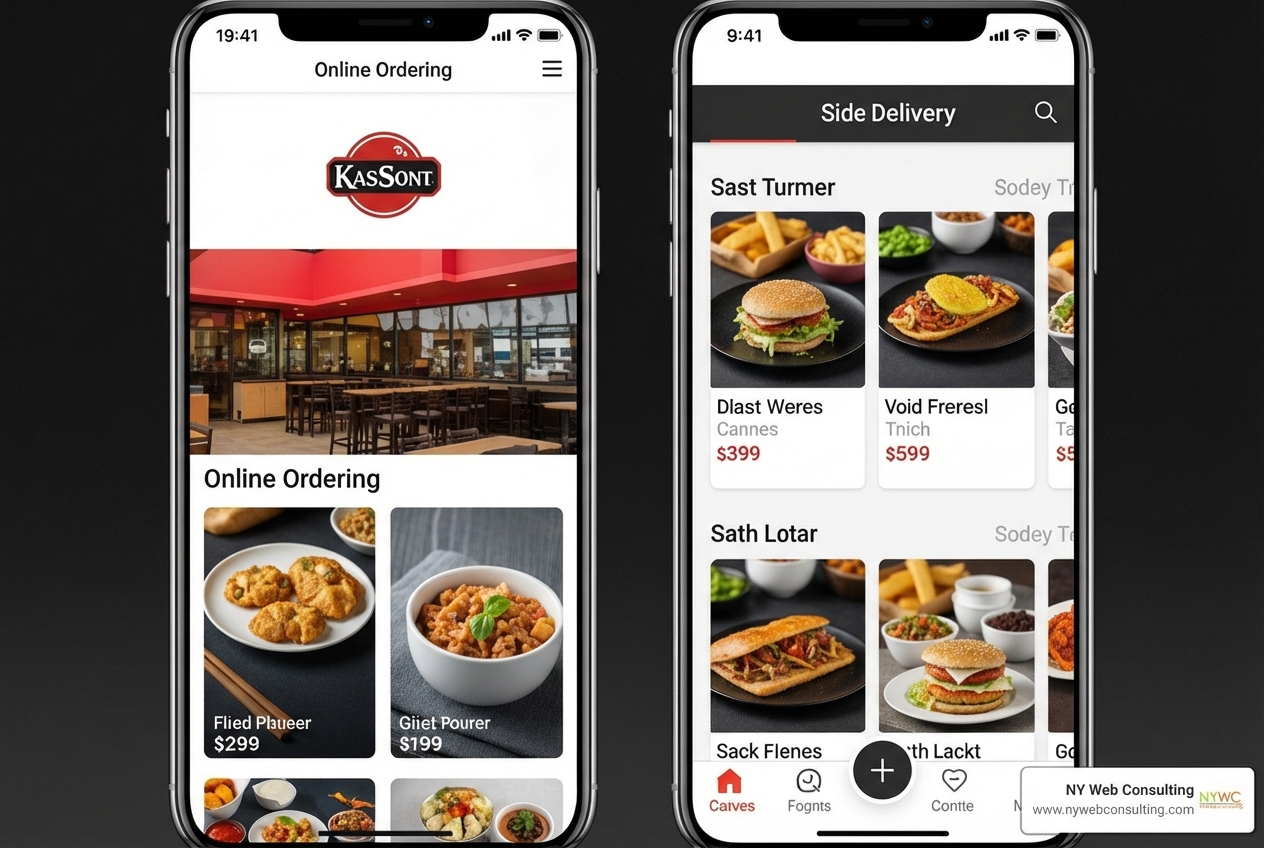
- Brand Control: You have full control over your digital experience, from design to menu presentation, ensuring it matches your brand identity. You can create your own ordering website with your brand’s logo, colors, and menus.
- Fostering Repeat Business: By owning the customer relationship, you can use loyalty programs, send targeted promotions, and encourage direct repeat orders, building a stronger customer base.
- Margin Retention: Encouraging customers to order directly—not from third-party apps—helps you keep more of your margins and foster repeat business.
- Real-World Example: You can View a demo store to see how a direct ordering system looks and functions.
All-in-One Platforms vs. Website Plugins for online ordering systems
Beyond the direct vs. third-party debate, you’ll also find different technical approaches to building your online presence.
- All-in-One Platforms (e.g., Square Online, Olo, Toast): These are hosted solutions providing everything in one package: website building, hosting, payment processing, and online ordering features.
- Ease of Use: Often feature drag-and-drop builders and intuitive interfaces, making them ideal for small businesses in Queens or Glendale that want to get online quickly without extensive technical knowledge.
- Integrated Hardware: Platforms like Square Online seamlessly integrate with Square POS and KDS, offering a unified ecosystem. Toast offers similar integration for restaurants.
- Scalability: Many are designed to scale with your business, offering different pricing tiers and advanced features as you grow.
- Total Cost of Ownership: While monthly fees vary, these platforms typically include hosting, security, and updates, simplifying management. Be aware of app marketplaces where additional features can add up.
- Website Plugins (e.g., WooCommerce for WordPress): These solutions integrate into an existing website platform like WordPress, adding e-commerce and online ordering functionality.
- Open-Source Flexibility: WooCommerce, for example, is a free, open-source plugin that transforms WordPress into an e-commerce store. This offers unparalleled flexibility and customization if you’re comfortable with more technical control.
- Content Management System (CMS) Integration: For businesses on WordPress or those wanting complete ownership of their digital presence, WooCommerce is the gold standard, leveraging WordPress’s powerful CMS for content marketing and SEO.
- Total Cost of Ownership: While the plugin is free, you must factor in hosting, themes, premium extensions, and potential development costs. The final cost can become unpredictable as premium extensions are added.
- Ideal Use Case: Great for NYC businesses that want to combine a robust content presence with powerful online sales. You can Explore WooCommerce options to see if this flexible approach suits your needs.
The Benefits of Commission-Free Ordering
The shift to direct, commission-free online ordering systems is a game-changer for profitability. This model lets businesses retain more revenue, build stronger customer relationships, and gain control over their operations.
- Predictable Costs: Instead of fluctuating commissions, many commission-free platforms offer flat monthly or per-order fees. This allows for clear, predictable cost planning, a huge relief for businesses in a competitive market like New York City.
- Increased Net Revenue Per Order: By avoiding hefty third-party commissions, you keep a larger percentage of each sale. This empowers you to increase net revenue per order, whether by self-delivery or charging a service fee. This additional margin can be reinvested into your business.
- Self-Delivery Options: Many direct online ordering systems let you manage your own delivery fleet, giving you greater control over the customer experience and potentially reducing delivery costs.
- Building Direct Customer Relationships: When customers order directly, they interact with your brand, not an intermediary. This direct channel fosters loyalty, enables personalized marketing, and encourages repeat business. Our research shows that encouraging direct orders helps you keep more of your margins.
- Access to Customer Data: Owning customer data is priceless. It enables you to understand preferences, tailor promotions, and build effective loyalty programs.
- Real-World Impact: Platforms like ChowNow focus on providing restaurants with commission-free ordering solutions, helping them maximize profits and streamline operations. Learn more about how this model can benefit your business: Online Ordering for Restaurants with No Commissions .
Implementation and Integration Strategy
Implementing an online ordering system means integrating it seamlessly into your operations and ensuring your team is ready to use it. For businesses in busy NYC, efficiency is paramount.
Integrating with Your Existing Technology
An effective online ordering system doesn’t operate in a vacuum. It should be a harmonious extension of your current business infrastructure.
- Website Integration: Your online ordering system should integrate smoothly with your existing website. This could mean embedding an ordering page, linking to a branded ordering profile, or building a full e-commerce site. The goal is a seamless customer journey. At NY Web Consulting, we specialize in changing websites into lead generation tools, and integrating powerful online ordering is a key part of that. If you’re looking to improve your digital presence, consider our Web Development Agency services.
- POS System Connection: This is a critical integration. Your online ordering system should connect directly with your Point of Sale (POS) system, ensuring online orders appear instantly alongside in-person transactions. This prevents manual order entry, reduces errors, and provides a unified view of all sales data. Systems like Square Online are tightly integrated into the Square ecosystem, making the transition effortless for existing users. Toast also offers dependable systems that integrate with their POS.
- API and Webhook Library: For complex needs or custom integrations, look for platforms with a robust API (Application Programming Interface) and webhook library. This allows developers to connect your online ordering system with other software like inventory management, CRM, or loyalty programs.
- Order Routing to Printers/KDS: Once an order is placed, it must reach the kitchen efficiently. The system should automatically route orders to your kitchen printers or Kitchen Display Systems (KDS). This ensures clear communication and faster preparation, helping your team manage queues during peak hours. Our research notes that online orders will show on your Square POS and your kitchen printer or Square KDS.
Key Considerations and Challenges
While the benefits of online ordering systems are clear, successful implementation requires careful planning.
- Upfront vs. Hidden Costs: Look beyond the monthly fee. Factor in setup costs, transaction fees, costs for premium features, hardware, and marketing. Some platforms offer free basic plans but charge for essential features or higher transaction volumes. For example, some platforms can eliminate monthly fees if you use their payment processing.
- Staff Training: Your team must be comfortable with the new system. This includes training on managing online orders, using the POS integration, handling fulfillment, and addressing customer inquiries. Comprehensive training and easy onboarding e-modules, like those offered by Epos Now, can be invaluable.
- Marketing Your Direct Channel: Having an online ordering system isn’t enough; you must actively promote it. Encourage customers to order directly from your website, not third-party apps, to maximize your margins. This involves clear calls to action on your website, social media, and in-store signage. Use analytics to customize your marketing and menu promotions.
- Choosing a Scalable Platform for Growth: Your business needs will evolve. Select a platform that can grow with you, whether that means adding locations, expanding your menu, or increasing order volume. Platforms like Olo are built for hospitality at scale, supporting 89,000+ restaurants. WooCommerce is also highly scalable for those comfortable with its open-source ecosystem.
- Search Engine Optimization (SEO): For your direct ordering website to attract customers, it must be findable online. Ensure your platform supports strong SEO practices, allowing your site to rank well in local search results for terms like “best pizza in Queens” or “coffee delivery NYC.” An optimized website is your 24/7 salesperson. Learn more about how to make your website visible with our guide on How to Optimize Your Website for Search Engines.
Frequently Asked Questions about Online Ordering Platforms
We often get asked how online ordering systems function and adapt to diverse business needs. Let’s tackle some common questions.
What is a web-based ordering system?
A web-based ordering system is a digital platform allowing customers to browse, order, and pay through a web browser on any device. The key is “web-based” – customers don’t need to download a dedicated mobile app to use it.
Customers can visit your website, click an “Order Online” button, and go directly to your digital menu. This provides easy access, as they don’t have to worry about app installations or updates. It’s an omnichannel approach that improves the customer experience, letting them engage with your business however they prefer. This setup is beneficial for local businesses in Glendale, Queens, or other parts of NYC, as it simplifies ordering for a broad customer base.
How do these systems support different business types like catering?
Online ordering systems are versatile and can be customized for a wide range of food businesses beyond traditional restaurants. For catering businesses, specialized platforms or modules offer features for their unique needs:
- Specialized Platforms: Some platforms, like Flex Catering, are built for catering and event management. They handle orders, production management, event logistics, and delivery scheduling.
- Group Ordering Features: Catering often involves large group orders. Some advanced online ordering systems include group ordering, allowing multiple people to contribute to a single order from their own devices. This simplifies coordination for corporate events or large family gatherings.
- Incremental Revenue Stream: For existing restaurants, adding a catering module to their online ordering system can open a significant additional revenue stream. Our research shows that for businesses like Freddy’s, catering is a meaningful revenue driver, and dedicated platforms can drive incremental sales.
- B2B and Wholesale: It’s not just B2C. Platforms like BlueCart are designed as all-in-one eCommerce solutions for wholesalers and B2B businesses in the food and beverage industry, enabling them to manage product catalogs and customer inquiries online.
Can I use an online system to sell on social media?
Absolutely. Modern online ordering systems are increasingly integrating with social media, turning your social channels into direct sales portals. Your followers can become customers with just a few clicks.
- Social Media Integration: Many platforms let you link your online menu or ordering profile to your Facebook, Instagram, and WhatsApp accounts. When a customer sees a dish on your Instagram feed, they can immediately click to order it.
- Turning Followers into Customers: This integration is a powerful way to leverage social media engagement. It transforms passive browsing into active purchasing. For a small business in Queens, this can expand your reach and make ordering convenient for your local community.
- Direct Sales Channel: Enabling social media ordering opens another direct sales channel, letting you capture orders without relying on third-party apps. This helps you maintain control over the customer experience and keep more of your margins.
Conclusion: Building Your Digital Growth Engine
Choosing the right online ordering system is a critical decision for your food business in today’s digital landscape. As we’ve explored, there is no one-size-fits-all solution. What works for a busy Manhattan restaurant might be overkill for a Glendale bakery, and a Queens food truck has different priorities than a large catering service.
The key is to assess your unique needs, budget, and growth aspirations. Prioritize features that streamline operations, improve the customer experience, and allow you to own customer relationships and retain your margins. The right platform isn’t just a place to list products; it’s your 24/7 salesperson, brand ambassador, and growth engine.
At NY Web Consulting, we understand the intricacies of building high-performing digital platforms for businesses in New York City. We specialize in changing websites into powerful lead generation tools, focusing on user experience and industry-leading technology. We can help you steer the complexities of integration, customization, and optimization to ensure your online ordering system delivers measurable results.
Ready to build a high-performing e-commerce solution that drives direct digital sales and fuels your growth? Explore how we can help your business thrive online. For insights into reaching your audience effectively, check out our resources on Marketing for Small Businesses. Or, if you’re ready to get started and launch your commerce solution swiftly, explore our options for Commerce Solutions Same Day.