

Why Speed Matters: Meeting Modern Consumer Demands
Commerce solutions same day are changing how businesses compete. Here’s what you need to know:
Quick Answer: Commerce Solutions Same Day
- Same-day delivery = Customer orders and receives the product the same day
- Key models: In-house fleet, third-party logistics (3PL), or hybrid (BOPIS/curbside pickup)
- Essential tech: E-commerce platform integration, order management systems, route optimization software
- Best for: Groceries, pharmaceuticals, local retail, flowers, electronics, fashion
- Cost: Variable pricing based on distance, flat fees, or subscription models
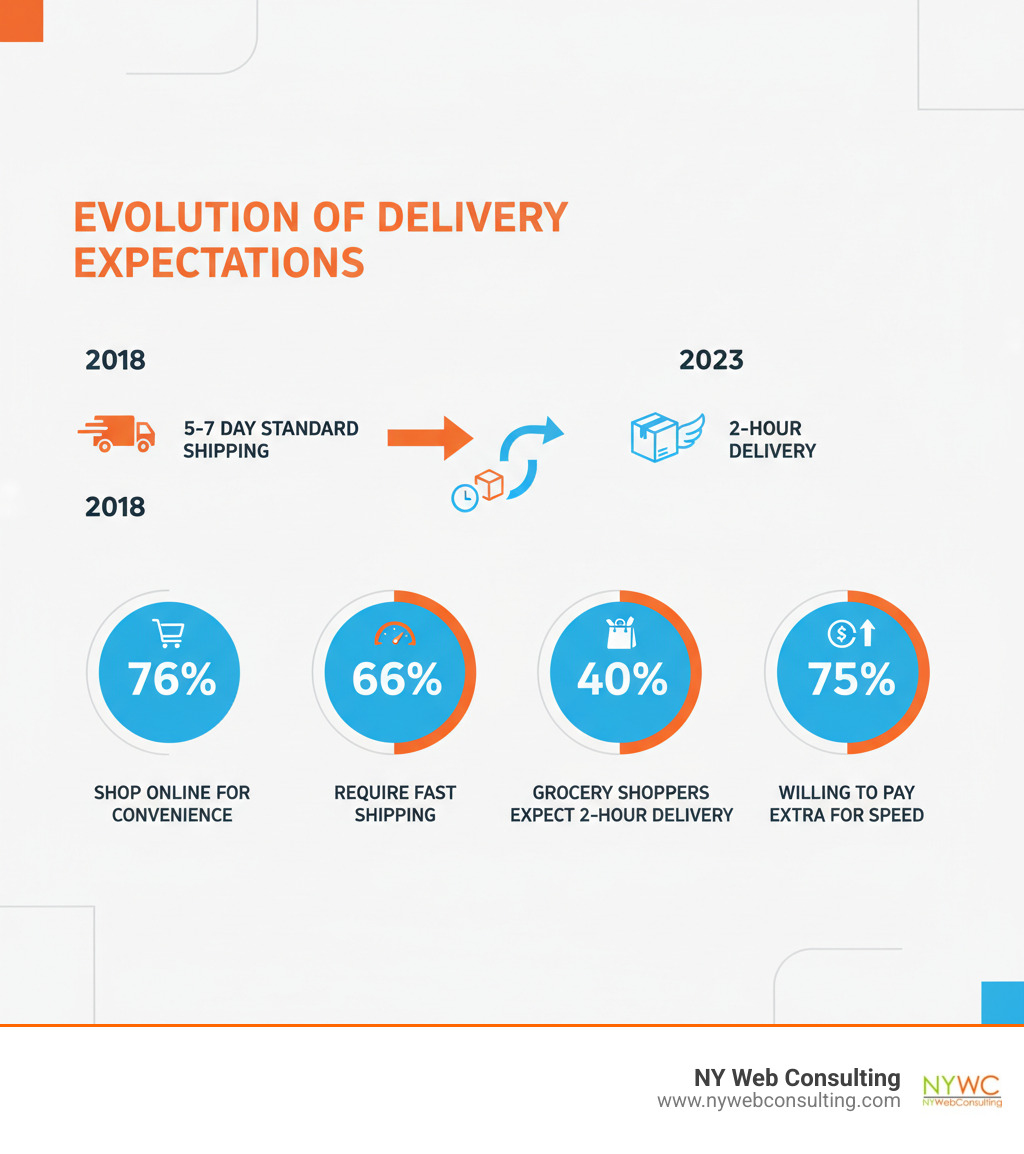
The e-commerce landscape has evolved. 76% of consumers shop online for convenience, and 66% say fast shipping is a necessity. This preference has become an expectation; 40% of online grocery shoppers in 2023 expected delivery within two hours.
Unlike traditional e-commerce where customers wait days, same-day commerce delivers instant gratification. This speed creates tangible benefits, as 62% of U.S. digital shoppers report that fast shipping creates a positive retail experience. Crucially, 75% of consumers have paid extra for expedited shipping, a figure that rises to 90% among higher-income households.
The challenge lies in implementation. Success requires careful planning, the right technology, and smart operations, from choosing a delivery model to ensuring your website and inventory systems can support real-time fulfillment.
The Business Case: Why Instant Gratification Boosts Your Bottom Line
Speed is no longer a luxury—it’s the baseline. For businesses offering commerce solutions same day, this shift in customer expectations is a major opportunity to grow revenue and build loyalty.
The numbers tell a compelling story, but behind them are real people deciding where to spend their money.
The Benefits of Speed
When you deliver fast, customers feel valued, which translates into measurable results. 62% of U.S. digital shoppers report that fast shipping creates a positive retail experience. This builds repeat business and word-of-mouth referrals.
Fast delivery also directly reduces cart abandonment. The ability to get a purchase today removes hesitation and turns consideration into conversion.
The financial benefits are striking. Brands using conditional pricing with superfast delivery see a 22% increase in 90-day Average Order Value and an 84% increase in 120-day customer Lifetime Value. These are business-changing numbers that make commerce solutions same day a core growth strategy, helping you Boost Online Sales.
Key Challenges and Cost Implications
Implementing same-day delivery requires operational changes. Your inventory management must be precise, and your warehouse, picking, and dispatch processes need to be faster. These upgrades, along with faster transportation and the necessary technology, represent a real investment.
You’ll also need to define delivery zones carefully, as covering all of New York City is different from focusing on a specific area like Queens.
While speed costs more, customers are willing to pay. 75% of consumers have paid extra for expedited shipping, and that number jumps to 90% for higher-income households. Younger shoppers are three times more likely to pay for speed. The key is finding a price point that covers costs while remaining attractive to customers.
Industries That Thrive on Same-Day Delivery
Some businesses are natural fits for this model due to product urgency or customer expectations:
- Groceries: For immediate needs like ingredients for tonight’s dinner.
- Pharmaceuticals: Urgency is paramount for health and wellbeing.
- Local retail: A local electronics or apparel store in Queens can gain a powerful advantage over distant warehouses.
- Flowers and gifts: Perfect for last-minute occasions and surprises.
- High-value electronics: For customers who need immediate replacements for broken devices.
- Fashion and apparel: Ideal for event-specific needs or impulse buys.
Implementing Commerce Solutions Same Day: Models and Strategies
Choosing the right delivery model is critical. What works for a large corporation may not suit a local shop in Glendale, Queens. Your decision should be based on your budget, desired control, and customer needs.
In-House Fleet Model
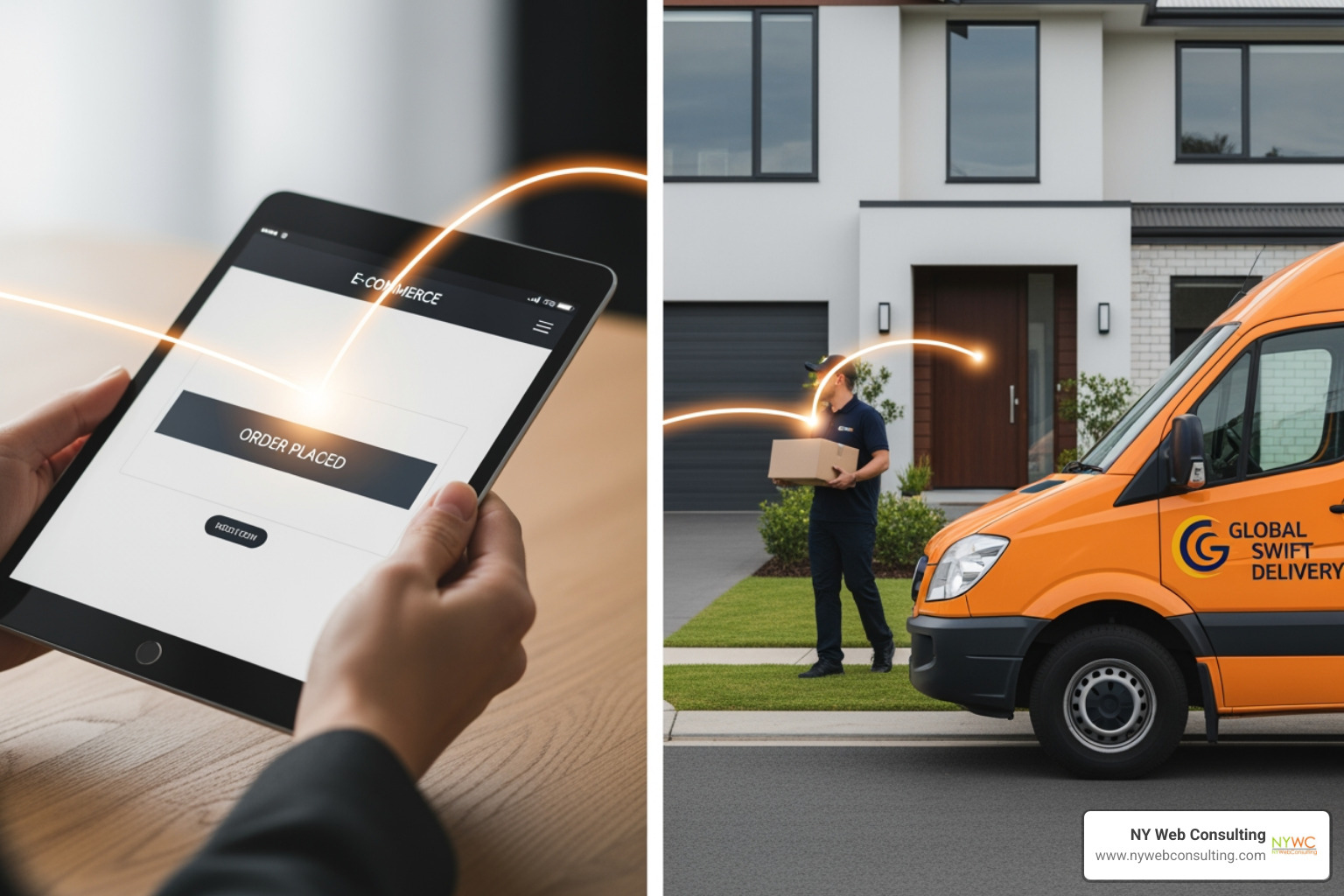
Running your own fleet gives you complete control over the delivery experience. Your vehicles and drivers become extensions of your brand, reinforcing your identity at the customer’s doorstep. This creates a premium, branded experience.
However, this model requires a significant commitment. Costs include vehicles, drivers, insurance, maintenance, and route optimization software to steer NYC traffic efficiently. The initial investment and ongoing management can be substantial, making it a better fit for larger, more established businesses.
Third-Party Logistics (3PL) and Delivery Partners
For most businesses, partnering with a 3PL is a more accessible option. These companies provide the vehicles, drivers, and technology, allowing you to leverage their existing infrastructure.
The main benefits are scalability and reduced overhead. You can handle demand spikes without hiring temporary staff and aren’t paying for idle resources during slower periods. Your primary focus becomes technology integration, ensuring your e-commerce platform communicates seamlessly with your delivery partners. Services like Shipsi integrate directly with platforms like Shopify via their Get Started with Shipsi on Shopify app, simplifying the process. The trade-off is less direct brand control, but modern 3PLs offer robust tracking and communication tools to ensure quality service.
Hybrid and Alternative Models
Blending models can offer the best of both worlds. Buy Online, Pick Up In-Store (BOPIS) is extremely popular, saving you delivery costs while driving foot traffic. In fact, 47% of shoppers buy extra items when picking up an order. For businesses with a physical storefront, BOPIS is an excellent Local SEO Solutions strategy.
Curbside pickup offers even more convenience. Other advanced models include dark stores (fulfillment-only retail locations) and micro-fulfillment centers (small, automated warehouses in dense urban areas), which are ideal for a city like New York.
The Tech Stack: Essential Tools for Efficient Same-Day Operations
Here’s the truth about commerce solutions same day: without the right technology working behind the scenes, even the best intentions fall flat. Your tech stack is the nervous system connecting your website, inventory, fulfillment team, and drivers. When these systems talk to each other seamlessly, magic happens. When they don’t? Well, that’s when orders get lost, customers get frustrated, and same-day delivery becomes same-week delivery.
At NY Web Consulting, we’ve seen how the right technical foundation transforms a business. We don’t just build pretty websites—we build the infrastructure that makes rapid fulfillment actually possible.
E-commerce Platform Integration
Your e-commerce platform must support seamless checkout, real-time inventory updates, and tight integration with logistics partners. Platforms like Shopify and BigCommerce are built with APIs that connect easily to fulfillment services. Their app marketplaces offer many solutions for rapid delivery.
For example, Shipsi’s Shopify app lets you enable same-day delivery at checkout, showing options to customers in your service area. You can manage locations and pricing from one dashboard. If you’re on Shopify, you can Get Started with Shipsi on Shopify to see how simple this can be. Our Web Design Services focus on creating platforms engineered for these complex demands from day one.
Logistics and Fulfillment Software
Once an order is placed, a suite of software is essential for same-day execution:
- An Order Management System (OMS) acts as your central command, tracking every order from placement to delivery.
- A Warehouse Management System (WMS) optimizes picking and packing by creating the most efficient paths for staff.
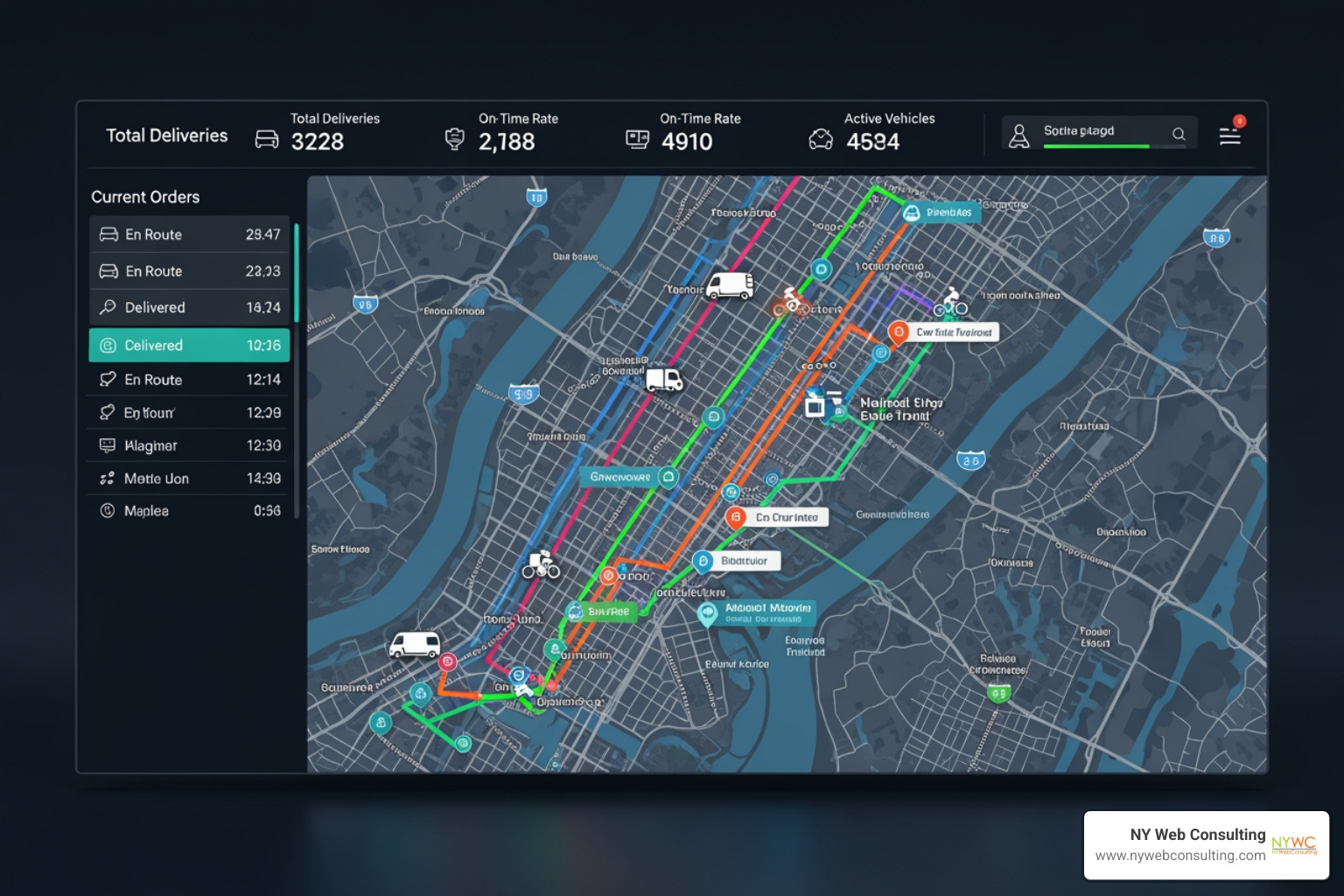
- Route optimization software is crucial in a city like New York, creating the smartest routes by analyzing traffic and delivery locations to save time and fuel.
- Real-time driver tracking and automated customer notifications (e.g., “Your driver is 10 minutes away”) provide transparency and build customer confidence.
Optimizing the Customer-Facing Website
Your website is where the customer experience begins. It must be fast, clear, and easy to use.
Mobile optimization is the foundation. In 2023, global e-commerce sales made on mobile devices reached $2.2 trillion, making up 60% of all online sales. Your site must load instantly on a smartphone. One-click checkout options from providers like Fastlane by PayPal, Stripe Link, or Bolt reduce friction and increase conversions.
Be transparent about your delivery options. Display cut-off times and costs prominently on product pages and in the cart. Clarity builds trust. Your website should be a lead generation machine, guiding visitors to take action. That’s why we focus on The Anatomy of a Lead Generation Website: Best Practices for Capturing Leads—because commerce solutions same day only boost your bottom line when your website actually converts visitors into customers.
Getting Started: A Step-by-Step Guide to Launching Your Service
So you’re ready to take the plunge and offer commerce solutions same day. That’s exciting! I know it can feel overwhelming, but here’s the truth: with a clear plan and the right approach, launching this service is completely doable—whether you’re running a business in Glendale, Queens, or anywhere across New York City.
Think of it like building a house. You wouldn’t start hammering nails before you’ve laid the foundation, right? Same principle here. We’ll walk through this together, step by step.

| Week | Key Milestones | Description |
|---|---|---|
| 1 | Demand & Feasibility Analysis | Research customer demographics, geographic density, product suitability, competitor offerings. |
| 2 | Model & Tech Stack Selection | Decide on in-house vs. 3PL/hybrid. Research and select e-commerce platform integrations, OMS, WMS, route optimization software. Budget allocation. |
| 3 | Setup & Integration | Configure shipping zones, cut-off times, delivery pricing within e-commerce platform. Integrate with chosen logistics partners. Staff training. |
| 4 | Launch, Market & Optimize | Announce new service. Run marketing campaigns (email, social, PPC). Monitor KPIs, gather feedback, and continuously refine operations. |
Step 1: Analyze Demand and Feasibility for your commerce solutions same day
First, determine if your customers want this service and if your business can deliver it. Analyze your customer demographics; younger shoppers are three times more likely to pay for expedited shipping. Assess geographic density—dense areas like NYC make deliveries more cost-effective. Evaluate product suitability for items with inherent urgency. Conduct a cost-benefit analysis to ensure the numbers work. Finally, perform a competitor analysis to understand the market landscape. Our SEO New York City Services can help you assess competitors and find your edge.
Step 2: Choose Your Fulfillment Model and Tech Stack
Next, decide on your operational model. Will you use an in-house fleet or a 3PL partner? For most small to medium businesses in NYC, a 3PL or hybrid model is the most practical starting point. Then, select your software partners, ensuring your e-commerce platform, OMS, and other systems integrate seamlessly. This platform integration planning is crucial and should be done from the ground up. Finally, create a clear budget allocation for technology, operations, and marketing.
Step 3: Set Up and Integrate your commerce solutions same day
This is the technical setup phase. Configure your shipping zones in your e-commerce platform, defining exactly which zip codes you’ll serve. Establish and clearly communicate your order cut-off times. Decide on a transparent delivery pricing strategy, whether it’s a flat fee, variable rate, or free over a certain threshold. Conduct thorough staff training on the new workflows. If you use Google Merchant Center, you’ll need to configure your shipping settings to reflect your new commerce solutions same day capabilities. This lets you display same-day delivery badges on your product listings, which can significantly boost click-through rates. Google has specific requirements for this, so check out their guide on About same-day delivery for online product listings to make sure you’re set up correctly.
Step 4: Launch, Market, and Optimize
You’ve built it. Now let’s make sure people know about it.
Promote your new service everywhere on your website. Put it front and center on your homepage. Display it clearly on product pages. Make sure it’s impossible to miss during checkout. This is your competitive advantage—don’t hide it!
Launch targeted marketing campaigns to spread the word. Send an email to your entire customer list announcing the new service. Post about it on social media with engaging visuals (maybe a video showing how fast you can deliver?). If you’ve got the budget, consider running targeted PPC Advertising campaigns focused on phrases like “same-day delivery in Queens” or “fast delivery NYC.”
But here’s the thing: launching isn’t the finish line. It’s actually just the beginning. You need to constantly monitor your KPIs. What’s your delivery success rate? How long are deliveries actually taking? Are customers satisfied? Is your average order value increasing? Is your conversion rate improving? Track all of it.
And please, gather customer feedback religiously. Send a quick survey after delivery. Monitor your reviews. Pay attention to customer service inquiries. Your customers will tell you exactly what’s working and what needs improvement—you just have to listen.
The businesses that succeed with commerce solutions same day aren’t the ones that launch perfectly. They’re the ones that launch, learn, adjust, and keep getting better. That’s the approach we take at NY Web Consulting with all our clients. We build the foundation, help you launch, and then work with you to optimize and grow over time.
Ready to get started? Let’s make it happen.
Frequently Asked Questions about Same-Day Commerce
When businesses start exploring commerce solutions same day, they usually have similar questions. Let’s walk through the most common ones we hear from our clients in New York and beyond.
How is same-day delivery different from same-day shipping?
This distinction trips up a lot of people, and it’s an important one to understand.
Same-day delivery means exactly what it sounds like: a customer places an order and receives that product in their hands on the very same day. Order a book at 10 AM in Glendale, Queens, and it’s sitting on your doorstep by 6 PM that evening.
Same-day shipping, on the other hand, only means the order leaves your warehouse or store on the same day the customer places it. But the actual delivery? That might still take one, two, or even several days, depending on the carrier and how far the package needs to travel.
The critical difference is in that word “delivery”—whether the item physically reaches the customer’s hands that day or just begins its journey. When customers see “same-day delivery” on your site, they’re expecting it at their door today, not just shipped today.
How much should a business charge for same-day delivery?
Pricing is where art meets science. You need to cover your costs while keeping the service attractive enough that customers actually use it.
Many businesses use a flat fee approach—one fixed charge for all same-day deliveries within their service area. It’s simple for customers to understand and easy to communicate. Others prefer variable rates based on delivery distance (maybe $5 within 5 miles, $10 for 5-10 miles) or order size. This can feel fairer to customers but adds complexity to your pricing structure.
Subscription models are gaining popularity, offering unlimited same-day deliveries for a monthly or annual fee. This encourages loyalty and repeat purchases—customers who’ve already paid for the service are more likely to use it often. Another effective strategy is offering free same-day delivery when orders exceed a certain dollar amount. This naturally pushes your Average Order Value higher while still providing the speed customers crave.
75% of consumers have previously paid extra for expedited shipping, and that number jumps to 90% for higher-income households. In a market like NYC, where convenience is highly valued, customers are often willing to pay for speed. Test different pricing approaches with your specific audience to find what works best.
Can small businesses realistically offer same-day delivery?
This is the question we hear most often, and the answer is an enthusiastic yes! While commerce solutions same day might seem like territory reserved for e-commerce giants, small businesses in New York City have several advantages that make this entirely achievable.
Start with a limited delivery zone. You don’t need to cover all five boroughs on day one. Focus on your immediate neighborhood—maybe just Glendale and a few surrounding areas in Queens. As you gain experience and confidence, you can gradually expand your reach. This keeps costs manageable while you learn the ropes.
Partnering with local 3PLs or courier services eliminates the need for your own fleet. Many specialized courier services in NYC focus on rapid, localized deliveries. They already have the infrastructure, the drivers, and the route optimization down pat. You’re essentially renting their expertise without the massive upfront investment.
Leveraging hybrid models like BOPIS (Buy Online, Pick Up In-Store) is a game-changer for brick-and-mortar businesses. It’s a low-cost way to offer instant gratification—customers get what they want immediately, and you bring foot traffic into your store. 47% of shoppers make additional purchases when picking up orders in-store. That’s a powerful multiplier effect.
If you sell specialized or niche products, your customers might be even more willing to pay for immediate access. A local pharmacy delivering prescriptions, a boutique delivering that perfect outfit for tonight’s event, or an electronics store getting a replacement charger to someone within hours—these are all realistic scenarios for small businesses.
The key is being strategic. You don’t need to do everything at once or match Amazon’s capabilities. Focus on what makes sense for your business, your customers, and your neighborhood. That’s how small businesses successfully compete with larger retailers and build loyal local customer bases.
Conclusion
Speed has become the new standard in e-commerce, and commerce solutions same day are changing how businesses connect with their customers. If you’re running a business in New York City, Glendale, Queens, or anywhere in the metropolitan area, embracing rapid delivery isn’t just about keeping up—it’s about staying ahead.
Throughout this guide, we’ve explored how same-day delivery directly impacts your bottom line. We’ve seen the numbers: 62% of U.S. digital shoppers report that fast shipping creates a positive experience, and businesses implementing these solutions see measurable increases in customer loyalty, conversion rates, and Average Order Value. When customers know they can count on you for speed, they come back again and again.
We’ve walked through the practical side too—choosing between in-house fleets, partnering with third-party logistics providers, or leveraging hybrid models like BOPIS that bring customers right to your door. Each approach has its place, and the right choice depends on your specific business needs, budget, and growth goals. The beauty is that you don’t have to be a massive corporation to compete. Small businesses in NYC can absolutely offer these services by starting local and smart.
But here’s what ties it all together: a well-designed website is the foundation that makes everything else possible. Without the right digital infrastructure—seamless platform integration, real-time inventory synchronization, mobile-first design, and clear communication of delivery options—even the best fulfillment strategy will stumble.
At NY Web Consulting, this is exactly what we do. We don’t just build pretty websites; we create high-performance sales tools that are fast, secure, and SEO-friendly. We understand the technical requirements behind commerce solutions same day because we’ve helped businesses integrate them successfully. Our approach focuses on changing your online presence into a lead generation powerhouse that converts visitors into loyal customers, whether they’re ordering groceries for tonight’s dinner or a last-minute gift.
The e-commerce landscape will only get faster from here. Meeting your customers where they are—demanding speed, convenience, and transparency—isn’t optional anymore. It’s how you grow.
Ready to turn your website into a rapid-commerce machine? Let’s build something together that doesn’t just keep pace with your customers’ expectations but exceeds them. Explore our Business Website Solutions and find how we can help you create the digital foundation for your instant commerce success.