
Why Understanding Your Users’ Journey Is the Key to Business Growth
User journey mapping is a visual representation of the steps and interactions a user goes through when engaging with your product or service to accomplish a goal. It’s a powerful tool that helps businesses understand their customers’ experiences, emotions, and pain points at every touchpoint.
Here’s what user journey mapping involves:
- Visual storytelling – Creating a chronological map of user interactions
- Empathy building – Understanding user motivations, thoughts, and feelings
- Pain point identification – Spotting where users struggle or get frustrated
- Opportunity findy – Finding moments to delight users and improve experiences
- Team alignment – Creating shared understanding across departments
The numbers tell a compelling story. Every dollar invested in UX brings $100 in return on average – that’s a 9,900% ROI. Meanwhile, 88% of online users are less likely to return to a website after a bad experience. For small business owners, this means understanding your users’ journey isn’t just nice to have – it’s essential for survival and growth.
Think of user journey mapping as putting yourself in your customer’s shoes. Instead of guessing what they want, you’re actually walking through their experience step by step. You’ll find where they get confused, what makes them happy, and why they might abandon their goal halfway through.
At NY Web Consulting, we’ve helped countless businesses in the Queens area transform their online presence by first understanding how users interact with their websites. Our experience in web design and SEO has shown us that the most successful websites are built around real user needs, not assumptions. When you map your users’ journey, you create a foundation for a website that actually converts visitors into clients.
What is User Journey Mapping and Why Is It Crucial?
Picture this: you’re trying to help a friend steer to your favorite restaurant, but you can only give them directions while wearing a blindfold. That’s what many businesses do when they design websites or services without understanding their users’ actual experience. User journey mapping changes everything by removing that blindfold and showing us exactly what our customers see, feel, and experience.
Think of user journey mapping as visual storytelling at its finest. It’s a way to build genuine empathy with your users while creating a shared understanding across your entire team. When everyone from your web developer to your marketing manager can see the same user pain points, magic happens. You stop making assumptions and start making decisions based on real user experiences.
The business impact is impossible to ignore. Every dollar invested in UX brings $100 in return – that’s not a typo, it’s a 9,900% ROI that can transform your bottom line. On the flip side, 88% of online users won’t return after a bad experience. For small businesses in Queens and beyond, this means user journey mapping isn’t just a nice-to-have – it’s essential for staying competitive and profitable.
Defining User Journey Mapping: A Visual Story
User journey mapping is fundamentally about process visualization from your user’s perspective. It captures how someone moves through your website or service to accomplish their goal, but it goes much deeper than a simple flowchart. This approach focuses on the user perspective, showing not just what they do, but what they think and feel at each step.
The real power lies in cross-team alignment. As the guide to journey mapping from Nielsen Norman Group explains, these visual stories are memorable and digestible. Your designer, developer, and business owner can all look at the same map and immediately understand where users struggle or succeed.
What makes this storytelling approach so effective is that it transforms abstract user data into a concrete narrative. Instead of guessing why users abandon their shopping carts, you can see exactly where confusion or frustration creeps in. This visual story becomes your roadmap for creating better user experiences.
The Business Case: Why Every Dollar Invested Matters
The connection between user journey mapping and business growth isn’t theoretical – it’s measurable and immediate. When you improve user experience through journey mapping insights, you’ll see increased conversions almost right away. Users who can easily find what they need and complete their goals become loyal customers who stick around.
Here’s what really matters: fully connected users are 52% more valuable than those who are merely satisfied. That’s the difference between someone who tolerates your website and someone who becomes a true advocate for your business. Higher customer loyalty translates directly into recurring revenue and word-of-mouth referrals.
User journey mapping gives you a competitive advantage because it turns guesswork into data-driven decisions. You’ll know exactly which improvements will have the biggest impact on your bottom line. Whether you’re optimizing your website’s conversion funnel or improving your customer service touchpoints, these insights guide your priorities.
At NY Web Consulting, we’ve seen how this approach transforms our clients’ results. When you combine user journey insights with our SEO Services, you create websites that don’t just attract visitors – they convert them into paying customers.
The Anatomy of a User Journey Map: Key Components and Variations
Think of a user journey map like a recipe for your grandmother’s famous apple pie. Just as that recipe has essential ingredients that make it special, every effective journey map needs specific components to truly capture your users’ experience. Without these key elements, you’re missing crucial pieces of the story.
The team at Nielsen Norman Group shows us how complex journey maps break down into digestible components. These maps work because they combine storytelling, visual design, and empathy to give your entire team a complete picture of how users actually interact with your product or service.
Core Elements of an Effective Map
Building a comprehensive user journey map is like constructing a house – you need a solid foundation and the right materials. Let’s walk through what makes a map truly effective.
The Actor (Persona) is your story’s main character. This isn’t just any random user – it’s a carefully crafted representation of your target audience based on real research, not gut feelings. Your persona includes demographics, behaviors, motivations, and pain points. We focus on one persona per map because trying to please everyone often means pleasing no one.
Scenario and Expectations set the stage for your user’s journey. What specific goal is your persona trying to achieve? Maybe they’re trying to book an appointment online and expect it to be quick and painless. Or perhaps they’re researching web design services and want to understand pricing without jumping through hoops.
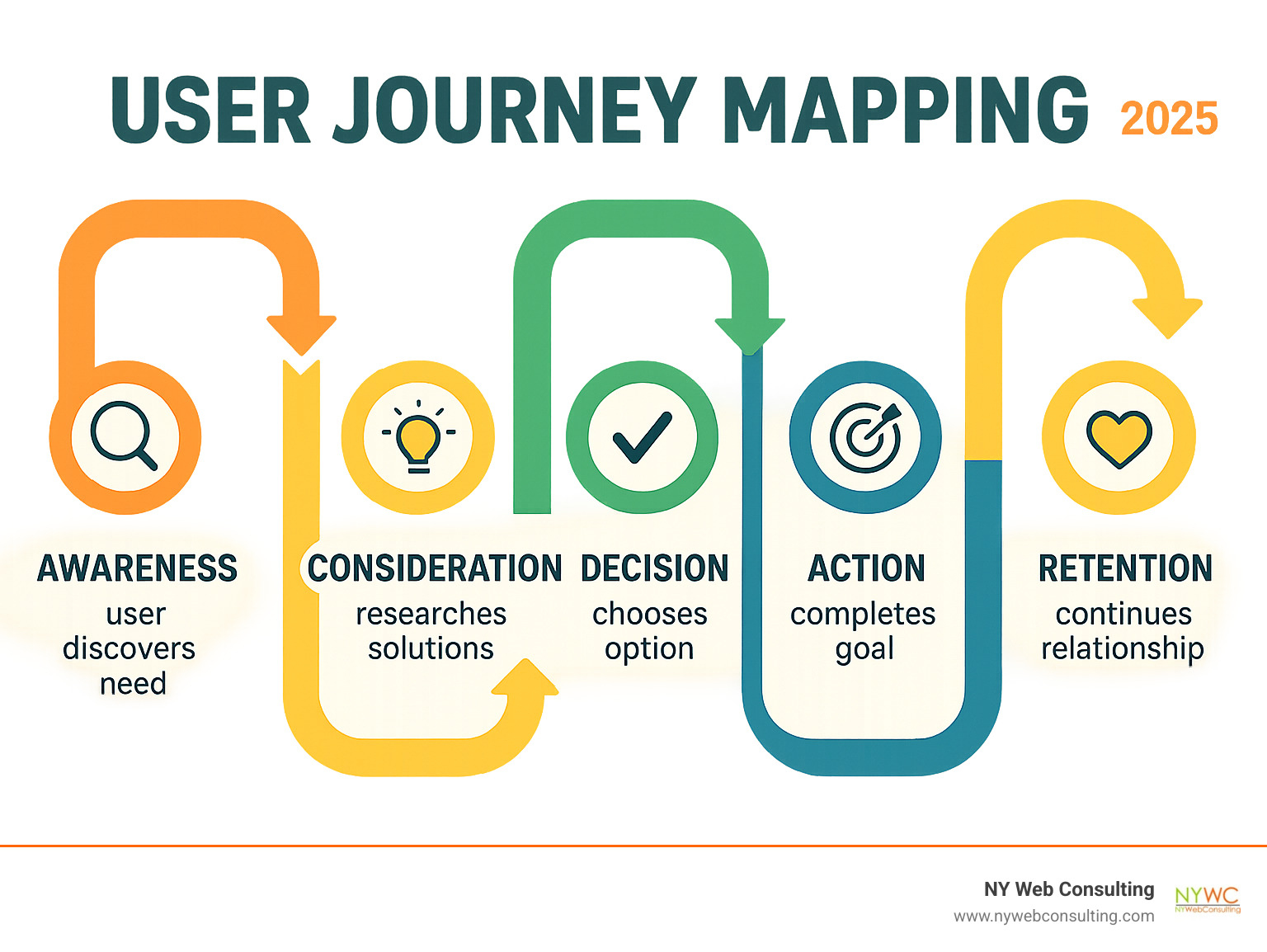
Journey Phases provide the backbone of your map – the high-level stages users move through. Common phases include Awareness (finding they have a need), Consideration (researching solutions), Purchase (making a decision), Usage (actually using your product), and Retention (becoming a loyal customer).
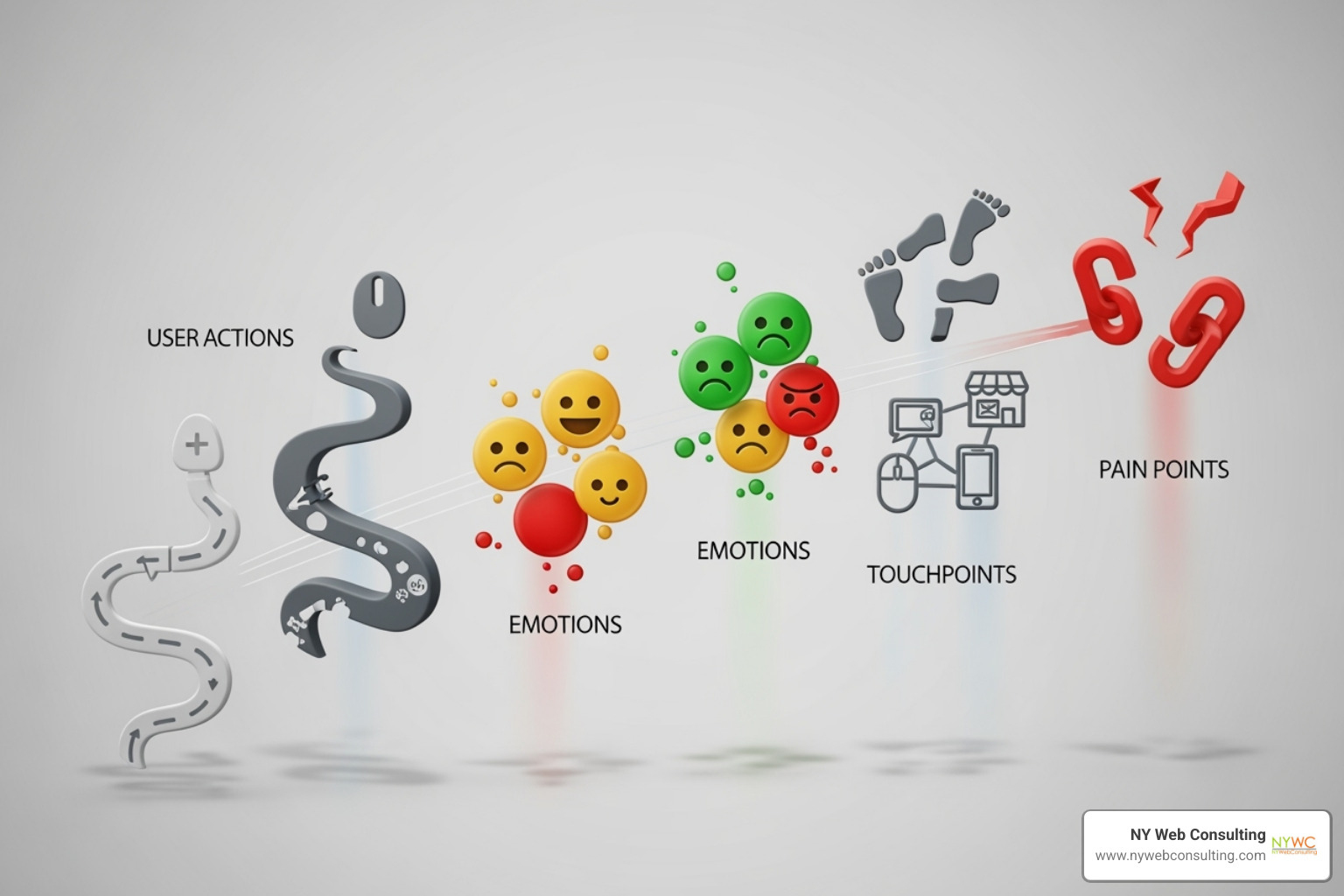
The real magic happens when we dive into Actions, Mindset, and Emotions. Actions capture what users are doing – clicking, scrolling, calling, or abandoning their cart. Mindset reveals what they’re thinking – “Is this the right choice?” or “Why is this taking so long?” Emotions show how they’re feeling – excited about a new findy or frustrated by a confusing checkout process.
Touchpoints are every single interaction users have with your brand. This includes your website, emails, phone calls, social media, and even word-of-mouth recommendations. Each touchpoint is an opportunity to either delight or disappoint.
Finally, Opportunities and Ownership transform insights into action. When you spot pain points and emotional low points, what can you do about them? More importantly, who on your team will take responsibility for making these improvements happen?
User Journey Map vs. Customer Journey Map and Other Models
The world of experience mapping can feel like alphabet soup sometimes. While these terms get tossed around interchangeably, understanding their differences helps you choose the right tool for your specific needs.
| Feature | User Journey Map | Customer Journey Map | Experience Map | Service Blueprint |
|---|---|---|---|---|
| Primary Focus | In-product interactions; UX design | End-to-end customer lifecycle; Brand touchpoints | General human behavior; Universal experience | End-to-end service delivery; Internal processes |
| Scope | Specific to product functionality/interface | Broader, covers all brand interactions (pre- & post-purchase) | Very broad; not tied to a specific product/brand | Comprehensive; includes backstage processes |
| User Type | Any user interacting with a product (even non-customers) | Paying customers (or potential customers) | Any person having a general experience | Users, employees, systems |
| Goal | Improve usability, optimize specific flows | Improve overall customer experience, loyalty, sales | Understand human needs, identify new opportunities | Optimize service delivery, align cross-functional teams |
| Output | Visualizes in-product actions, emotions, pain points | Visualizes all touchpoints, emotions, brand interactions | Visualizes common human experiences, needs | Visualizes frontstage, backstage, and support processes |
A user journey map zooms in on the specific path someone takes within your product or website. A customer journey map takes a wider view, following the entire customer relationship from first hearing about your brand to becoming a loyal advocate. Experience maps go even broader, focusing on universal human behaviors, while service blueprints dive deep into the internal processes that support the customer experience.
Think of it this way: if you’re trying to improve your website’s checkout process, a user journey map is perfect. If you want to understand how customers find and choose your business, a customer journey map makes more sense.
Exploring Different Types of User Journey Maps
Just like there are different types of trips – weekend getaways, business travel, or cross-country adventures – there are different types of user journey maps for different purposes.
Current-state maps show exactly how users interact with your product right now, warts and all. These are incredibly valuable for identifying immediate pain points and quick wins. It’s like taking a honest look in the mirror before getting dressed up.
Future-state maps paint a picture of your ideal user experience after implementing planned improvements. These act as your north star, guiding strategic decisions and keeping everyone aligned on where you’re heading.
Day-in-the-life maps zoom out to show how your product fits into users’ broader daily routines. These often reveal surprising opportunities – maybe your accounting software could send helpful reminders during tax season, or your fitness app could integrate with users’ morning coffee ritual.
High-traffic journeys focus on the paths most users take through your site or app. These are often conversion-critical flows like signup processes or checkout sequences where small improvements can have massive impact.
High-dollar journeys track experiences that generate significant revenue or where substantial money is at risk. For a web design agency like NY Web Consulting, this might be the journey a potential client takes from initial consultation to signing a contract.
OEC (Overall Evaluation Criterion) journeys balance user satisfaction with long-term business value. Rather than optimizing just for short-term gains, these maps help you build sustainable success by improving metrics that matter most to your business’s overall health.
Your Blueprint for Success: How to Create a User Journey Map
Ready to roll up your sleeves and create your own user journey mapping masterpiece? Think of this as your recipe for success – we’ll walk through each ingredient and step to help you cook up insights that transform your business.

The magic happens when you bring your team together around a whiteboard (or virtual workspace) and start mapping out your users’ real experiences. This isn’t a solo project – the best user journey maps come from collaborative efforts where everyone contributes their piece of the puzzle.
Getting started requires four key steps: defining your focus, gathering solid research, mapping the experience, and then refining your work based on real feedback. Let’s explore each step.
Step 1: Define Your Persona and Scope
Every great story needs a hero, and your user journey map is no different. Your hero is your user persona – a detailed character based on real research, not wishful thinking or gut feelings.
Start by digging into your user research data. Who are your actual users? What drives them? What keeps them up at night? Create a persona that includes their demographics, behaviors, motivations, and biggest challenges. Give them a name, a face, and a backstory that makes them feel real to your team.
Here’s the crucial part: focus on one persona per map. It’s tempting to try mapping everyone’s journey at once, but that’s like trying to tell five different stories simultaneously. Pick one persona, one specific goal they’re trying to achieve, and one clear starting and ending point.
Set SMART goals for your mapping project too. What do you hope to find? Maybe you want to reduce checkout abandonment by 25% or identify why users drop off during onboarding. Having clear objectives keeps your mapping focused and actionable.
Step 2: Gather Your Research (Qualitative & Quantitative)
Think of research as the foundation of your house – skip this step, and everything else becomes shaky. You need both the what and the why behind user behavior, which means combining qualitative and quantitative data.
Qualitative research tells you the story behind the numbers. Conduct user interviews where you sit down with real users and ask about their experiences. Send out surveys with open-ended questions that let people share their frustrations and desires in their own words. Sometimes the most valuable insights come from watching users interact with your website – you’ll be amazed at how differently they steer compared to what you expect.
Quantitative data gives you the hard facts. Tools like Google Analytics show you exactly where users are going, how long they’re staying, and where they’re dropping off. Heatmaps reveal where people actually click (spoiler: it’s often not where you think). Funnel analysis shows you the specific steps where users bail out of your process.
The beauty happens when you combine both types of data. The numbers show you what is happening, while the interviews and surveys explain why it’s happening. This combination helps you build maps based on reality, not assumptions. For more insights on using this data to improve your online presence, check out our guide on How to Optimize Your Website for Search Engines.
Step 3: Map the Stages, Actions, and Emotions
Now comes the fun part – actually creating your visual story. Grab your team, some sticky notes, and either a big whiteboard or a digital tool like Miro or Figma. This is where the magic of user journey mapping really shines.
Start by breaking down your user’s journey into chronological stages. These might be something like Awareness, Research, Decision, Purchase, and Follow-up. Keep these high-level and logical – they’re the chapters in your user’s story.
Within each stage, document the specific actions your user takes. Be detailed but stay focused on what actually moves them forward (or holds them back). Then capture what’s going through their mind at each step. What questions are they asking? What concerns are popping up? What information are they seeking?
Here’s where user journey mapping gets really interesting – plot the emotional journey. Draw a line across your map showing whether your user feels positive, neutral, or negative at each step. This emotional rollercoaster often reveals your biggest opportunities. Those dips in the line? Those are your pain points begging for attention.
Don’t forget to identify every touchpoint where users interact with your brand. This includes your website, emails, phone calls, social media, and even word-of-mouth conversations. Each touchpoint is a chance to either delight or disappoint.
Step 4: Visualize, Validate, and Iterate
Creating a beautiful map is satisfying, but it’s not the finish line – it’s more like halftime. Your map needs to be clear enough that anyone on your team can look at it and immediately understand your user’s experience.
Consider using established templates like the NN/g Journey Mapping Template (PDF) to structure your information effectively. The goal is making your insights accessible to everyone from developers to executives.
But here’s the reality check: your first map is probably wrong in some places. That’s totally normal! Validate your map by testing it with real users. Show them your visualization and ask if it matches their actual experience. You’ll often find gaps between what you mapped and what actually happens.
The most successful user journey maps are living documents that evolve with your users and your business. Set up a system to regularly review and update your maps as you gather new data, launch new features, or notice changes in user behavior. This continuous improvement cycle ensures your maps stay relevant and your insights stay sharp.
The map itself isn’t the destination – it’s the tool that helps you create better experiences for your users, which ultimately drives better results for your business.
From Insights to Impact: Driving Growth with Journey Mapping
So, we’ve mapped the journey, identified the bumps in the road, and celebrated the smooth stretches. Now what? This is where the real magic happens: turning those insights into tangible improvements that drive business growth.
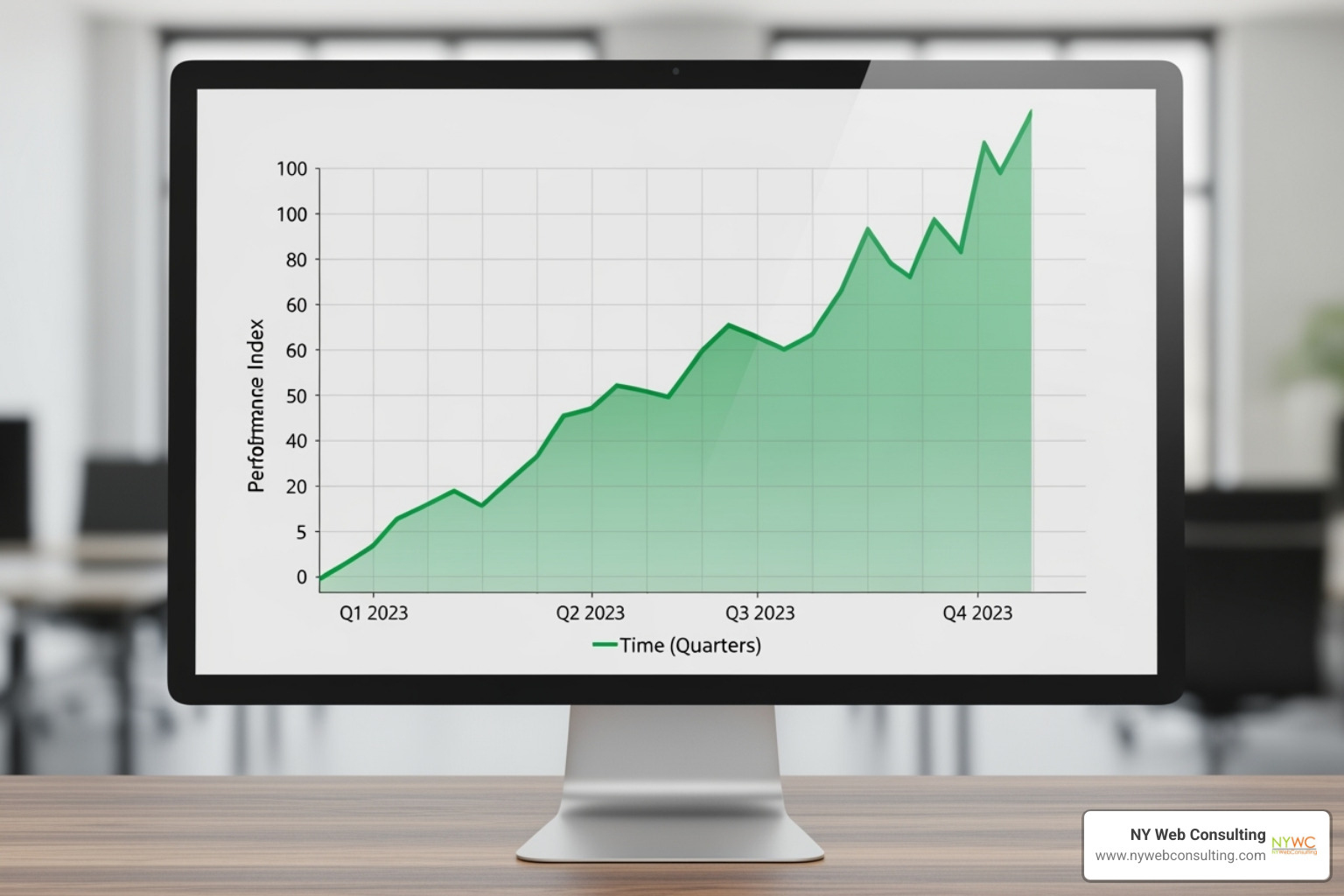
User journey mapping isn’t just about understanding; it’s about action. It’s about using that newfound empathy to improve our products and services, ultimately leading to better business outcomes and a happier user base.
Uncovering “Moments of Truth” and Common Pain Points
As we carefully map out the user’s path, certain points will stand out. We call these “moments of truth” – critical junctures where the user makes a decision that can significantly impact their journey (and your business). This could be deciding to sign up, making a purchase, or choosing to abandon a process.
Alongside these moments, we uncover common pain points: areas of friction, frustration, or confusion. This might be a confusing form, a slow loading page, or a lack of clear information. These pain points are where users often feel uncomfortable or difficult situations arise. Identifying these precisely allows us to target our improvement efforts effectively. Humorously, sometimes a pain point is just a user muttering, “Why can’t this just work?!” – and our job is to make it work.
Turning Opportunities into Actionable Improvements
Once we’ve identified the pain points and opportunities for delight, we prioritize them based on impact and feasibility. Not every problem can be solved at once, so we focus on those that will yield the greatest benefit for our users and our business.
This often involves brainstorming solutions, enhancing existing features, or optimizing entire flows. For a website, this could mean streamlining the navigation, improving content clarity, or optimizing call-to-actions. For some businesses, this might even involve delving into Advanced SEO Strategies to ensure users find the right information at the right time. The goal is always to remove obstacles and create a smoother, more enjoyable experience.
Best Practices for an Effective User Journey Mapping Process
To ensure your user journey mapping efforts are successful and deliver lasting value, we recommend adhering to these best practices:
- Involve a cross-functional team: Bring together individuals from marketing, sales, product, customer support, and design. Each department offers a unique perspective that enriches the map and fosters shared ownership of the insights.
- Start with the current state: Before dreaming up future ideal states, thoroughly map the existing user experience. You can’t fix what you don’t understand.
- Base decisions on research, not assumptions: Your map’s accuracy depends on real data from user interviews, analytics, and observations. Assumptions are just guesses; research provides facts.
- Assign ownership for opportunities: For every identified opportunity for improvement, assign a specific team or individual responsible for implementing the solution. This ensures accountability and action.
- Make the map a living document: User journeys are dynamic. Regularly review, update, and refine your maps as your product evolves, user behaviors change, and new data becomes available.
Frequently Asked Questions about User Journey Mapping
We’ve been helping businesses in Queens and beyond create better user experiences for years, and we’ve noticed that certain questions about user journey mapping come up again and again. Let’s tackle the most common ones to help you get started on the right foot.
What is the difference between a user journey map and a user flow?
Think of this like planning a vacation versus following GPS directions. A user journey map is your strategic overview – it shows the entire emotional adventure your user goes through to reach their goal, including all their thoughts, feelings, and pain points along the way. It’s the story of someone planning their dream vacation, complete with excitement, research anxiety, and decision fatigue.
A user flow, on the other hand, is more like those step-by-step GPS directions. It’s a tactical diagram showing the exact clicks, taps, and screens a user encounters to complete a specific task on your website or app. While the journey map asks “Why is the user frustrated when booking flights?”, the user flow shows “Click here, then here, then fill out this form.”
Both are valuable, but they serve different purposes. The user journey map helps you understand the bigger picture and build empathy, while the user flow helps you optimize specific interface interactions.
How do you handle multiple user personas in journey mapping?
Here’s where many businesses make a costly mistake – trying to create one map that serves everyone. It’s like trying to plan a vacation that perfectly suits both your adventure-seeking teenager and your comfort-loving grandparents. It just doesn’t work.
The best practice is to create a separate user journey map for each primary user persona. Yes, this means more work upfront, but it ensures each map accurately reflects the unique goals, behaviors, and pain points of that specific user segment. A busy small business owner shopping for web design services has completely different motivations and frustrations than a marketing manager at a larger company.
When you try to combine multiple personas into one map, you end up with something generic that doesn’t really help anyone. Each persona deserves their own spotlight, their own story, and their own custom solutions.
How can I create a journey map with a limited budget?
Don’t let a tight budget stop you from understanding your users better! Some of our most successful user journey mapping projects have started with nothing more than a whiteboard and some sticky notes.
Start by mining the data you already have. Your Google Analytics can tell you where users are dropping off. Your customer support tickets are full of pain points and frustrations. Your sales team knows exactly what questions prospects ask and where they get stuck. This internal knowledge is incredibly valuable and costs nothing to access.
Gather your team – sales, support, marketing, anyone who talks to customers – for a collaborative mapping session. Use free tools like a simple whiteboard or even a basic spreadsheet template. The goal isn’t to create a perfect map right away; it’s to start the conversation and build that foundational understanding of your users.
Focus on mapping just one critical journey first – maybe your most important conversion path or the process that generates the most support calls. Once you prove the value of this exercise and start seeing improvements, you can invest in more sophisticated tools and expand to other journeys. A simple map that gets used is infinitely more valuable than a complex one that sits on a shelf.
Conclusion: Start Mapping Your Path to Success
Think back to the last time you got frustrated trying to use a website or app. Maybe you couldn’t find what you were looking for, or the checkout process felt like solving a puzzle. That frustration? It’s costing businesses millions of customers every single day.
User journey mapping changes everything. It’s your secret weapon for understanding exactly what your users experience when they interact with your business. Instead of guessing what might be wrong, you get a clear picture of where people get stuck, confused, or delighted.
The benefits speak for themselves. When you truly understand your users’ journey, you create experiences that feel effortless and intuitive. Your user experience improves dramatically, leading to higher customer satisfaction and genuine business growth. People stick around longer, buy more, and tell their friends about you.
But here’s the thing – empathy isn’t just a nice-to-have in business anymore. It’s a competitive advantage. When you map your users’ journey, you’re building empathy into every decision you make. You’re creating a user-centric design approach that puts real people at the center of everything you do.
The process transforms how your team thinks. Instead of making changes based on what sounds good in a meeting, you’re making decisions backed by real user insights. That’s how you drive organic growth that actually lasts.
At NY Web Consulting, we’ve seen this change happen countless times. A well-designed website is the foundation for a great user journey, and that’s exactly what we specialize in. We don’t just build pretty websites – we create digital experiences that guide users smoothly from their first click to becoming loyal customers.
Our approach combines the power of user journey mapping with industry-leading technology and SEO expertise. We understand that every pixel, every button, and every piece of content should serve a purpose in your user’s journey.
Ready to stop guessing what your users want and start knowing? Ready to create a website that actually converts visitors into customers? Transform your website with our expert Web Design Services and find what happens when you put your users’ journey first.