
Why Lead Generation Websites Are Critical for Business Growth
Best lead gen websites are changing how businesses attract and convert customers. With 61% of marketers calling lead generation their top challenge, a strategic online presence is essential. Traditional web forms convert only around 5% of visitors, but companies with mature lead generation processes generate 133% more revenue than average performers.
Top lead generation website types for 2024:
- All-in-One CRM & Marketing Hubs
- AI-Powered Landing Page Builders
- On-Site Conversion Tools
- B2B Prospecting Platforms
- Conversational Marketing Tools
- Interactive Content Platforms
- Social & Search Ad Lead Forms
The solution is clear: modern lead gen websites use AI, intent data, and personalized experiences to dramatically improve conversion rates. They create engaging experiences that build trust and guide visitors through a conversion funnel, leading to a 35% higher conversion rate and 24% more qualified leads.
At NY Web Consulting, our Queens-based team builds custom, SEO-optimized websites designed specifically to turn visitors into loyal customers, so you can focus on running your business.
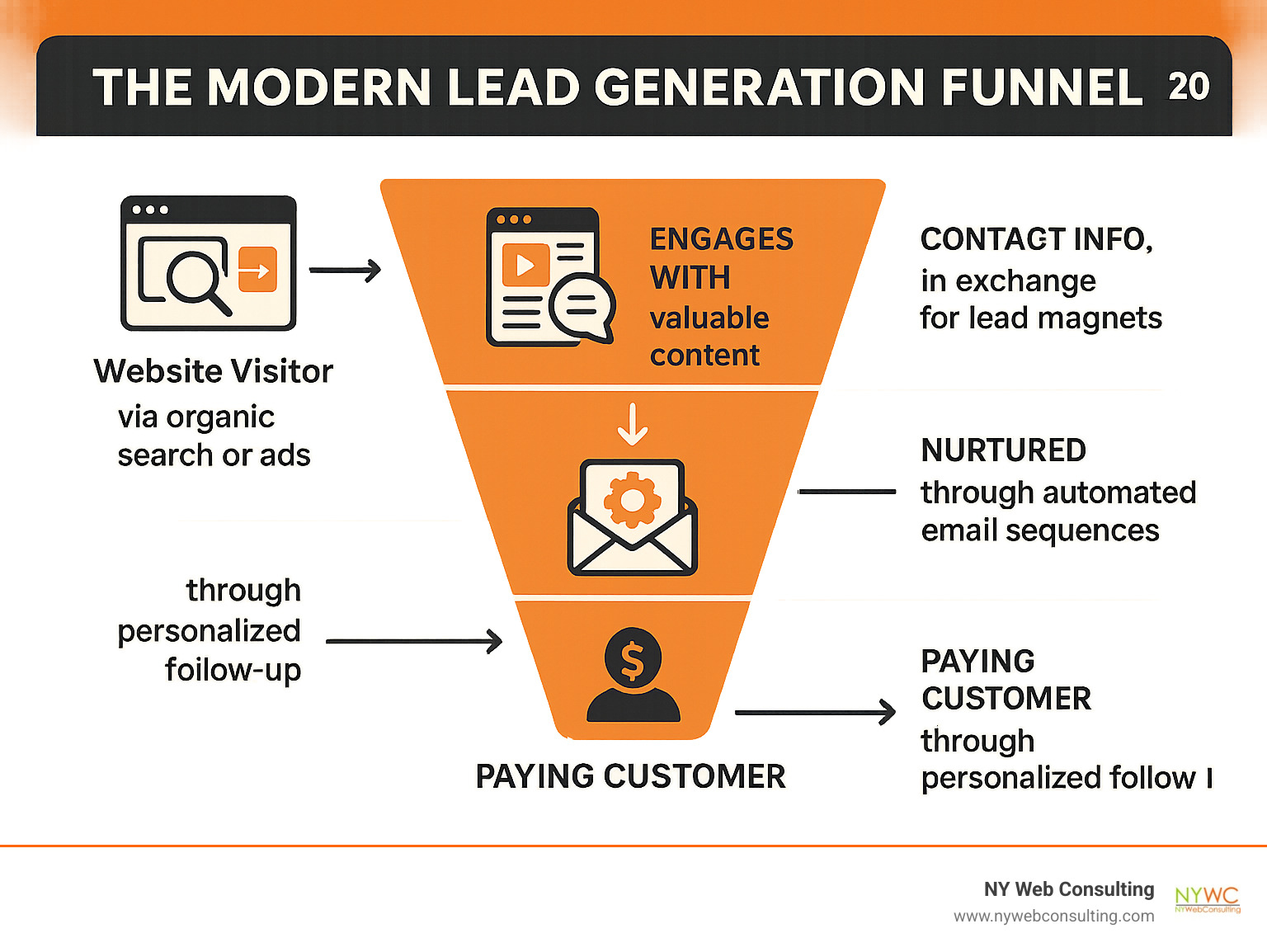
The Evolution of Lead Generation: Why Quality is King
The days of buying massive email lists are over. The modern lead generation landscape has shifted from a “spray and pray” approach to a sophisticated focus on quality over quantity. This makes sense, as 61% of marketers say generating traffic and leads is their top challenge and acquisition costs continue to rise.
Quality leads are game-changers: they convert at higher rates and have a higher lifetime value. This evolution is driven by technology that allows for a more precise and personalized approach.
The Role of AI and Advanced Technology
Artificial intelligence is the secret weapon behind today’s most successful lead generation campaigns. It makes the entire process smarter and more efficient.

- Predictive Analytics: AI tools analyze data to predict which visitors are most likely to become customers.
- Automated Outreach: Sophisticated AI can send personalized emails and schedule follow-ups at optimal times.
- AI Chatbots: These tools qualify leads 24/7 and hand off hot prospects to your sales team.
- Data Enrichment: AI automatically gathers additional information about your leads, giving your sales team valuable insights before the first call.
Why Content and Account-Based Marketing (ABM) Still Dominate
While AI provides the power, content marketing and Account-Based Marketing (ABM) remain the strategic foundation. Valuable content like e-books, whitepapers, webinars, and case studies positions your business as a trusted expert and naturally attracts people who need your solutions.
ABM takes a laser-focused approach, identifying high-value companies and creating personalized campaigns for key decision-makers. The magic happens when sales and marketing teams align on these target accounts, leading to soaring conversion rates.
For businesses looking to implement these strategies, our Advanced SEO Strategies guide provides practical insights on creating content that attracts your ideal customers.
Key Features of High-Converting Lead Generation Websites
Is your website working 24/7 to convert visitors into customers? Most websites convert only 2-3% of their visitors, meaning 97-98% of potential customers are leaving without a trace. The best lead gen websites are strategic powerhouses designed to dramatically improve these numbers.
Modern consumers expect genuine value, seamless experiences, and trustworthy interactions. By delivering on these expectations, you create a lead generation machine that grows your business around the clock. At NY Web Consulting, we’ve helped clients achieve conversion rate improvements of 200-400% by implementing these proven strategies. A great starting point is understanding How to Optimize Your Website for Search Engines.
Core Components of the Best Lead Gen Websites
Several key elements work together to turn a good-looking website into a high-converting one.

- Clear Value Proposition: Visitors should instantly understand what you offer and why it matters to them. Be clear, benefit-focused, and display it prominently.
- Compelling Calls-to-Action (CTAs): Use strategic, value-driven invitations like “Get Your Free Marketing Audit” instead of generic “Contact Us” buttons.
- Trust Signals: Testimonials, client logos, and reviews build confidence. 88% of consumers trust online reviews as much as personal recommendations.
- Mobile-First Design: With over 60% of web traffic coming from mobile, your site must be flawless on smartphones, prioritizing speed and ease of use.
- Fast Page Speed: A one-second delay can reduce conversions by 7%. Optimizing your site’s speed is critical. Our guide on How to Reduce Your Image File Size to Increase Website Speed offers practical steps.
Essential Platform Capabilities to Look For
Behind every great lead gen website is a robust platform with critical technical capabilities.
- Automation: Automatically capture leads, send follow-ups, and notify your sales team so no lead falls through the cracks.
- CRM Integration: Seamlessly feed lead data into your CRM, giving your sales team full context for faster, more effective follow-up.
- Lead Scoring: Prioritize your hottest prospects by automatically scoring leads based on their behavior and demographics.
- Advanced Analytics: Gain detailed insights into your conversion funnel to identify what’s working and where to improve.
- A/B Testing: Optimize your site based on real user data by easily testing different headlines, CTAs, and layouts.
- Scalability: Choose a platform that can grow with your business, preventing future headaches as your lead volume increases.
The 7 Best Lead Gen Websites & Platform Types for 2024
The lead generation landscape in 2024 is wonderfully diverse, with a specialized platform for nearly every business need. The best lead gen websites recognize that a one-size-fits-all approach doesn’t work; what’s right for a B2B software company may be wrong for a local service business.
We’ve identified seven distinct categories of lead generation platforms that are delivering exceptional results this year. However, before diving in, ensure your foundation is solid. A properly optimized Google Business Profile can dramatically improve local lead generation. Our guide on The Power of Creating a Google Business Profile in 2023 shows you how to do it right.
Many successful businesses combine multiple platform types to create a comprehensive system. The key is to understand your specific business model and customer journey to select the right tools. These platforms are no longer just tools; they are intelligent systems that learn from your data and improve over time.
1. All-in-One CRM & Marketing Hubs
Think of these platforms as the command centers of lead generation, designed for businesses that want a single, unified system. They excel by combining centralized customer data with powerful automation.
Every prospect interaction is stored in one place, giving your sales and marketing teams a complete view of the customer journey. The marketing automation capabilities allow you to create sophisticated email sequences triggered by user behavior, nurturing leads automatically. This streamlining helps track deals, assign tasks, and ensure no lead falls through the cracks.
Most hubs include tools for landing page creation and provide integrated analytics, offering a complete picture of your performance. This promotes crucial sales and marketing alignment, as both teams work from the same data.
Best Use Cases: Businesses wanting a complete, integrated solution to manage the entire customer lifecycle, especially those with dedicated sales and marketing teams.
2. AI-Powered Landing Page & Form Builders
These platforms are conversion optimization specialists, using artificial intelligence to perfect the crucial first impression on your landing pages and forms.
Examples: Unbounce, Leadpages

AI-optimized pages learn from visitor behavior to suggest changes that boost conversion rates. Their real strength lies in interactive forms, which feel more like conversations than intimidating questionnaires. Multi-step forms, for example, can increase completion rates by up to 300%.
Built-in A/B testing makes it easy to find what resonates with your audience, while conversion-focused templates provide a professionally designed, optimized starting point. These tools reduce friction and make it easy for visitors to become leads.
Best Use Cases: Marketers running paid ad campaigns or content marketing efforts who need to maximize the conversion rate of every visitor.
3. On-Site Conversion Optimization Tools
Most websites lose over 95% of their visitors without capturing a lead. On-site conversion optimization tools act as a digital sales assistant, engaging visitors at the perfect moment to turn them into leads.
Examples: OptinMonster, Hotjar
These tools read visitor behavior and respond intelligently. Exit-intent pop-ups detect when a user is about to leave and present a compelling offer, while scroll-triggered forms appear only after a visitor has shown interest by scrolling through your content.
Beyond lead capture, these tools help you understand why users aren’t converting. Heatmaps show where people click and scroll, and session recordings let you watch anonymized user journeys to identify friction points. These insights are gold for improving user experience and boosting conversions.
Best Use Cases: Businesses with existing website traffic that want to convert more of their anonymous visitors into qualified leads.
4. B2B Prospecting & Data Enrichment Platforms
For B2B companies, finding the right decision-maker is a major challenge. These platforms act as a super-powered detective, giving you access to millions of professional contacts and detailed company information.
Examples: Apollo.io, ZoomInfo
These are among the best lead gen websites for identifying and connecting with key contacts. Their power lies in several key features:
- B2B Contact Databases: Access millions of verified emails and phone numbers. Apollo.io, for instance, has over 275 million B2B contacts.
- Intent Data Signals: Identify companies that are actively researching solutions like yours right now, allowing for perfectly timed outreach.
- Technographic Data: See what technologies a company uses to tailor your pitch to their specific needs and pain points.
- Lead Enrichment: Automatically fill in missing details for your existing leads, such as job title, company size, and recent business news.
This data enables you to build precise ideal customer profiles (ICPs) and conduct highly personalized, effective outreach.
Best Use Cases: B2B sales and marketing teams focused on outbound prospecting, lead qualification, and building highly targeted campaigns.
5. Conversational Marketing & Chatbot Platforms
Conversational marketing platforms turn passive website visits into active, helpful conversations, much like a friendly sales associate in a physical store.
Examples: Intercom, Drift
AI chatbots are the workhorses, available 24/7 to answer questions, qualify leads, and gather essential information. They can handle multiple conversations at once and ensure no opportunity is missed, even outside of business hours.
When a human touch is needed, conversations can be seamlessly handed off to a live chat agent. These platforms enable real-time engagement, triggering personalized messages based on visitor behavior, such as lingering on a pricing page. Many also feature automated meeting booking, allowing qualified prospects to schedule a call directly in the chat interface, which dramatically reduces friction and speeds up the sales cycle.
Best Use Cases: Businesses looking to provide instant support, improve customer experience, and capture leads through natural, relationship-building conversations.
6. Interactive Content Platforms
Interactive content transforms passive visitors into engaged prospects by allowing them to experience value rather than just read about it. Instead of a boring form, a user can take a fun quiz or use a helpful calculator, making lead capture feel natural.
Examples: Typeform, Outgrow
These platforms excel at creating engaging user experiences. An ROI calculator helps a prospect visualize the savings your solution offers, while a quiz or assessment can help them identify pain points and receive personalized recommendations. This process builds trust and demonstrates your expertise upfront.
The real power is in capturing qualified leads. The questions you ask guide users through a process that reveals their specific needs, budget, and timeline. This provides your sales team with warmer, better-qualified leads who are already educated about their challenges.
Best Use Cases: Marketers aiming to boost engagement, gather deeper audience insights, and make lead generation a more enjoyable and valuable experience for prospects.
7. Native Social & Search Ad Lead Forms
When investing in paid advertising, maximizing every click is crucial. Native social and search ad lead forms are game-changers, enabling frictionless lead capture directly within the platform where the user saw the ad.
Examples: LinkedIn Lead Gen Forms, Google Ads Lead Form Extensions
Instead of sending users to a separate landing page, these forms appear directly within Facebook, LinkedIn, or Google. They often come pre-filled with user data from their profile, meaning a prospect may only need one or two clicks to submit their information. This streamlined, mobile-optimized process dramatically increases conversion rates.
By capturing high-intent leads directly from ads, you engage prospects at the peak of their interest. This efficiency often leads to a lower cost-per-lead compared to traditional landing page funnels. Plus, most platforms offer easy CRM integration, ensuring new leads flow directly into your system for immediate follow-up.
Best Use Cases: Advertisers running paid campaigns on social media or search engines who want to maximize conversions and ROI by capturing leads with minimal friction.
Strategies for Implementation & Measuring ROI
Choosing the right platforms is just the start. The real success of the best lead gen websites comes from strategic implementation and diligent measurement. Optimizing your entire sales funnel is key to creating a system that consistently delivers results. For inspiration, see how different industries approach this in our list of Top 10 Vending Website Designs in 2023.
How to Choose the Best Lead Gen Websites for Your Budget and Goals
With so many options, start by understanding your needs and budget. You’ll typically encounter per-user, tiered/usage-based, or freemium pricing models. However, assessing ROI goes beyond the monthly fee. Focus on these key metrics:
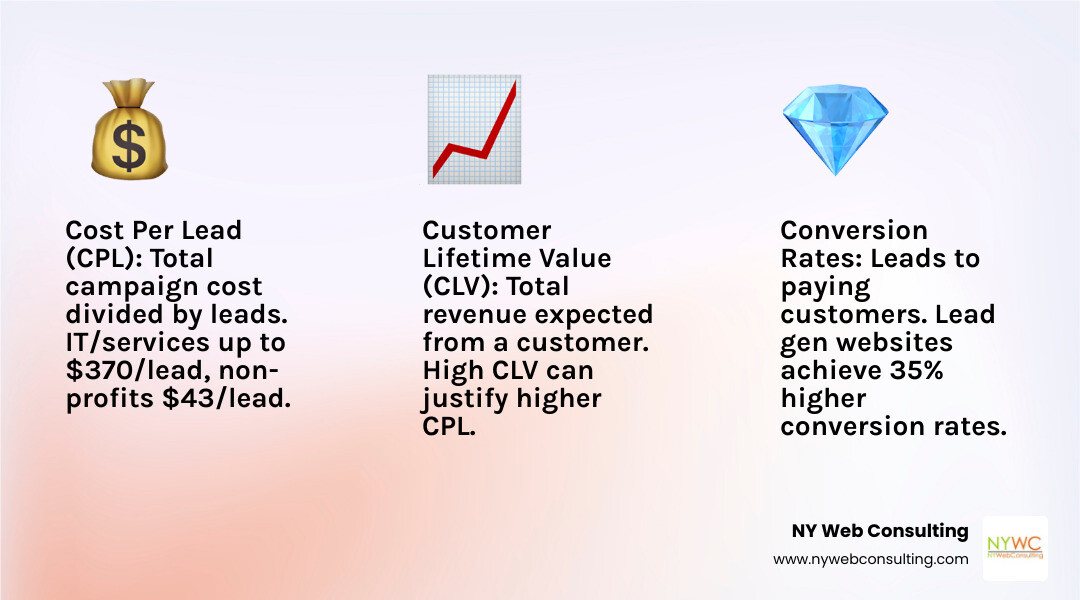
- Cost Per Lead (CPL): How much you spend to acquire each lead. This varies by industry, but knowing your number is crucial.
- Conversion Rate: The percentage of leads that become customers. High-performing lead gen sites see rates 35% higher than average.
- Customer Lifetime Value (CLV): The total revenue a customer generates. A high CLV justifies a higher CPL for quality leads.
Also, consider scalability. Choose a solution that can grow with your business to avoid painful migrations later.
Best Practices for a Successful Rollout
A powerful platform is useless without proper implementation. Follow these best practices for a successful rollout:
- Integrate with Existing Systems: Ensure your new platform communicates seamlessly with your CRM and other essential tools.
- Map Your Sales Process: Understand how leads move through your funnel to identify where the new tool can add the most value.
- Train Your Team: Invest in comprehensive training and support to ensure high adoption and proper use of the platform.
- Commit to Continuous Optimization: Lead generation is not “set it and forget it.” Use A/B testing and performance reviews to constantly improve.
- Make Data-Driven Decisions: Use the platform’s analytics to refine your strategy and maximize your investment.
Frequently Asked Questions about Lead Generation Websites
We get many questions from business owners looking to improve their online lead generation. Here are answers to the most common ones.
What makes a lead generation website effective?
The best lead gen websites combine a professional, trustworthy design with a crystal-clear value proposition. They use compelling calls-to-action (CTAs) to guide visitors, build confidence with trust signals like testimonials, and leverage technology for automation and analytics. The key is to offer genuine value in exchange for a visitor’s contact information.
How can a small business improve its lead generation online?
Small businesses can see huge improvements by focusing on smart strategies. Start with a professional, fast, and SEO-friendly website to attract organic traffic. Create valuable content (blogs, guides) that helps your audience solve problems. Optimize your Google Business Profile, which is crucial for local findy. Finally, leverage cost-effective tools for email marketing and social media; many offer affordable plans to get started.
What are the most important metrics to track for lead generation?
To improve, you must measure. Focus on these four key metrics:
- Conversion Rate: The percentage of visitors who become leads. Traditional forms convert around 5%, so there’s often significant room for improvement.
- Lead Quality Score: An assessment of how likely a lead is to become a customer. Quality is more important than quantity.
- Cost Per Lead (CPL): How much you spend to acquire each new lead. Knowing this helps you manage your budget effectively.
- Return on Investment (ROI): The ultimate measure of success, comparing the revenue generated to the cost of your efforts. Strategies like SEO can provide an ROI of 748%.
Conclusion
We’ve explored the best lead gen websites and platforms that can transform your business in 2024. The old “spray and pray” method is gone, replaced by a sophisticated approach where quality trumps quantity every time.
Modern lead generation is about creating genuine connections. Whether through AI-powered landing pages, chatbots, or interactive content, the goal is to provide value, build trust, and make it easy for the right people to express interest. The companies seeing 35% higher conversion rates aren’t just using better tools—they’re using them strategically.
Success requires proper implementation, team training, and continuous optimization. At NY Web Consulting, we specialize in changing your website into a powerful growth engine that works around the clock to attract and convert your ideal customers.
Our Queens-based team combines expert Web Design Services with proven marketing strategies to build lead generation systems that grow with your business. The fundamentals are timeless: understand your audience, provide value, and make it easy for them to connect with you.