
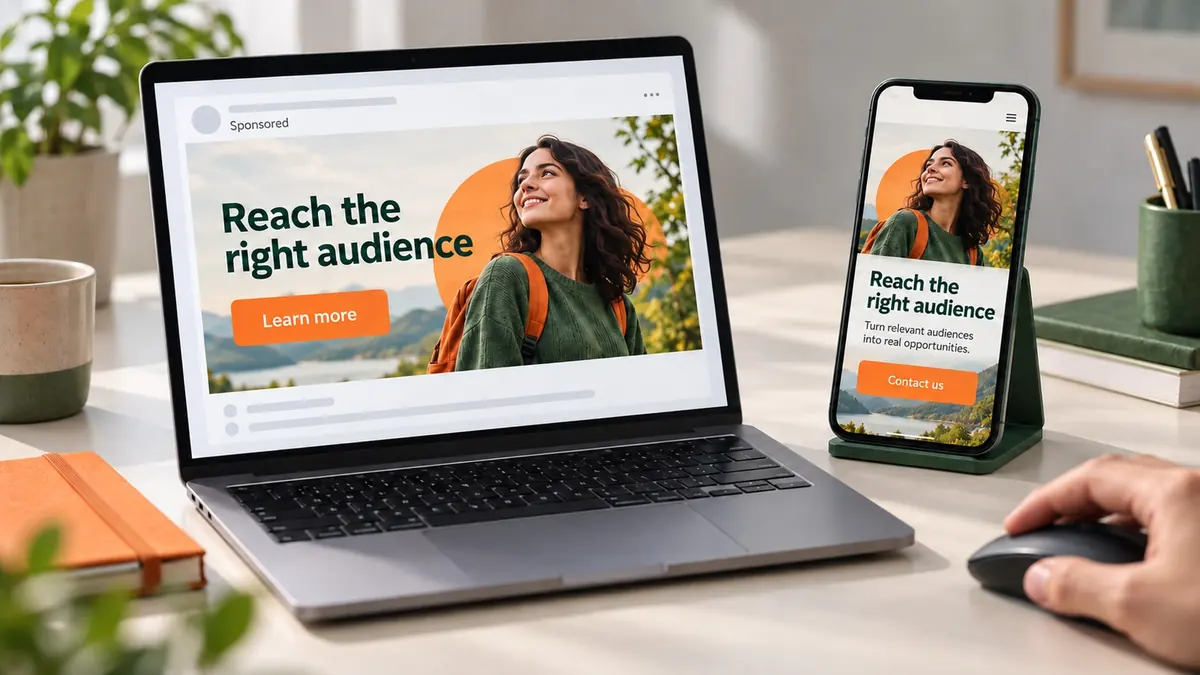
Paid marketing can put an offer in front of a selected audience. Its value depends on what happens after the impression or click: whether the page answers the customer’s question, whether the next step works, and whether your team responds.
Start with a business objective you can evaluate. “Generate inquiries for our commercial maintenance service” provides a clearer brief than “get more clicks.”
Define the audience and offer
Describe who needs the service, what triggers the need, and what would make them contact you. Choose an offer your team can explain and deliver. This might be a project discussion, product demonstration, or a specific service inquiry.
Then choose channels based on where that audience can be reached and the intent behind their activity. Search advertising and social advertising serve different roles; neither is automatically the right starting point for every business.
Make the campaign scope explicit
Separate advertising spend from setup, management, creative, landing-page development, and reporting. Agree spending limits, account access, and who can approve changes.
A focused initial campaign makes it easier to understand what you are learning. Our paid marketing service connects campaign planning with the website and follow-up rather than treating an ad as a standalone asset.
Continue the message on the landing page
The page should explain the offer the ad introduced. A campaign promoting one service should not require a visitor to search the homepage to find it.
Google’s landing-page guidance emphasizes relevance and usefulness. In practice, check that the page names the service, answers likely questions, works on a phone, and offers a clear next step. Web design and development can address this part of the journey.
Prepare the handoff before spending
Test the form and confirmation message. Agree who receives the inquiry and what they need to know. If your business has multiple teams, define how the inquiry reaches the right person.
A useful confirmation says what happens next without promising a response time your team cannot consistently meet. Where appropriate, connect the handoff to a CRM or an agreed email process.
Separate activity from outcomes
Review impressions, clicks, landing-page behavior, inquiries, and qualified opportunities as different measures. A recorded conversion event is only the event you configured; it is not automatically a sale.
Ask the people handling inquiries about fit, intent, and common questions. Use that feedback to refine targeting, messaging, and the page. Better decisions come from connecting campaign data with real business context, while acknowledging gaps in attribution.